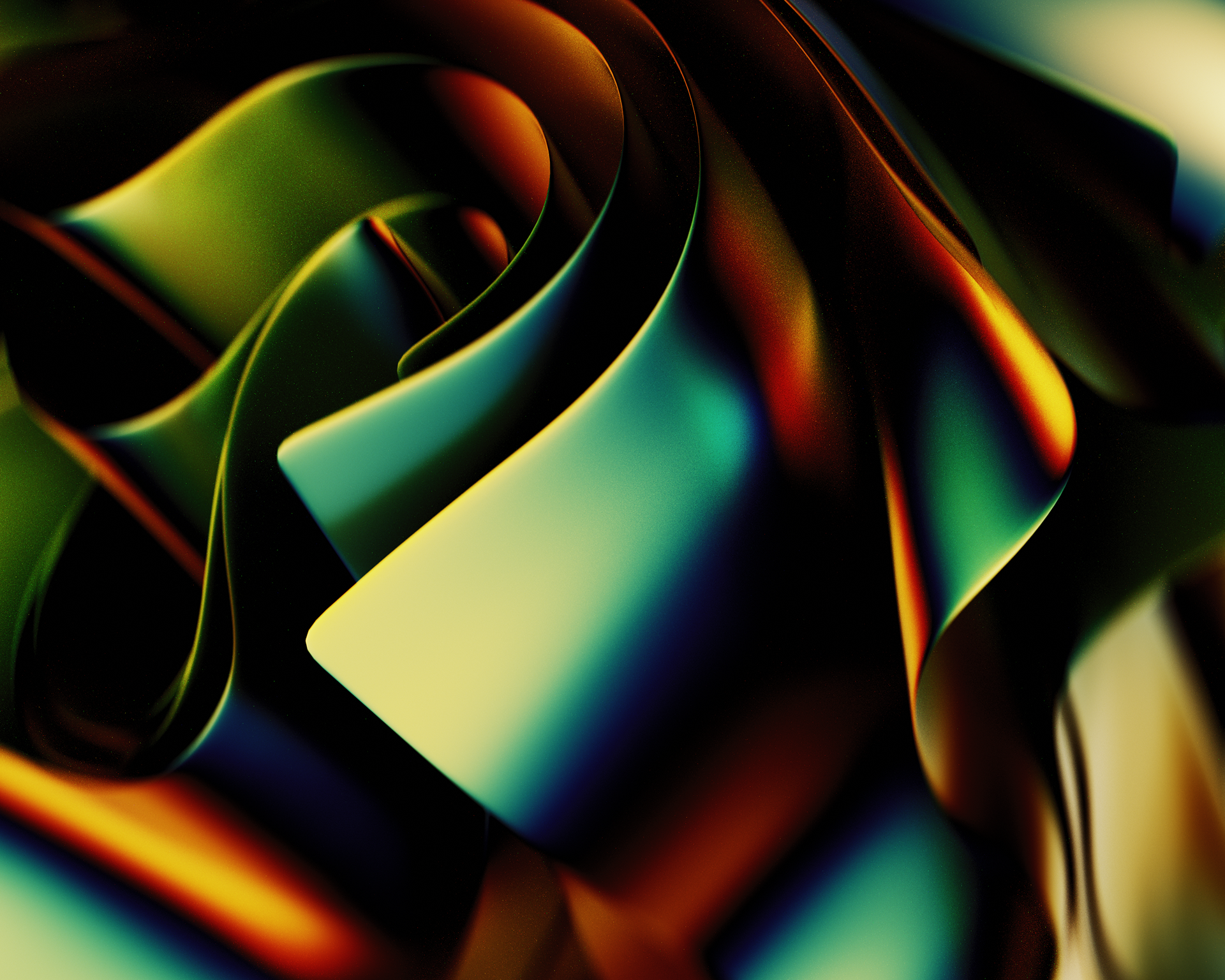

I view 3D rendering as an extension of photography and sculpture. This medium allows me to precisely control light and materials to create scenes that oscillate between the real and the impossible.
My work is rooted in a subtle surrealism. I do not seek to tell a specific story, but rather to establish an atmosphere. I privilege suggestion over narrative: my compositions are conceived as ethereal spaces where the viewer is free to interpret the details based on their own sensitivity.
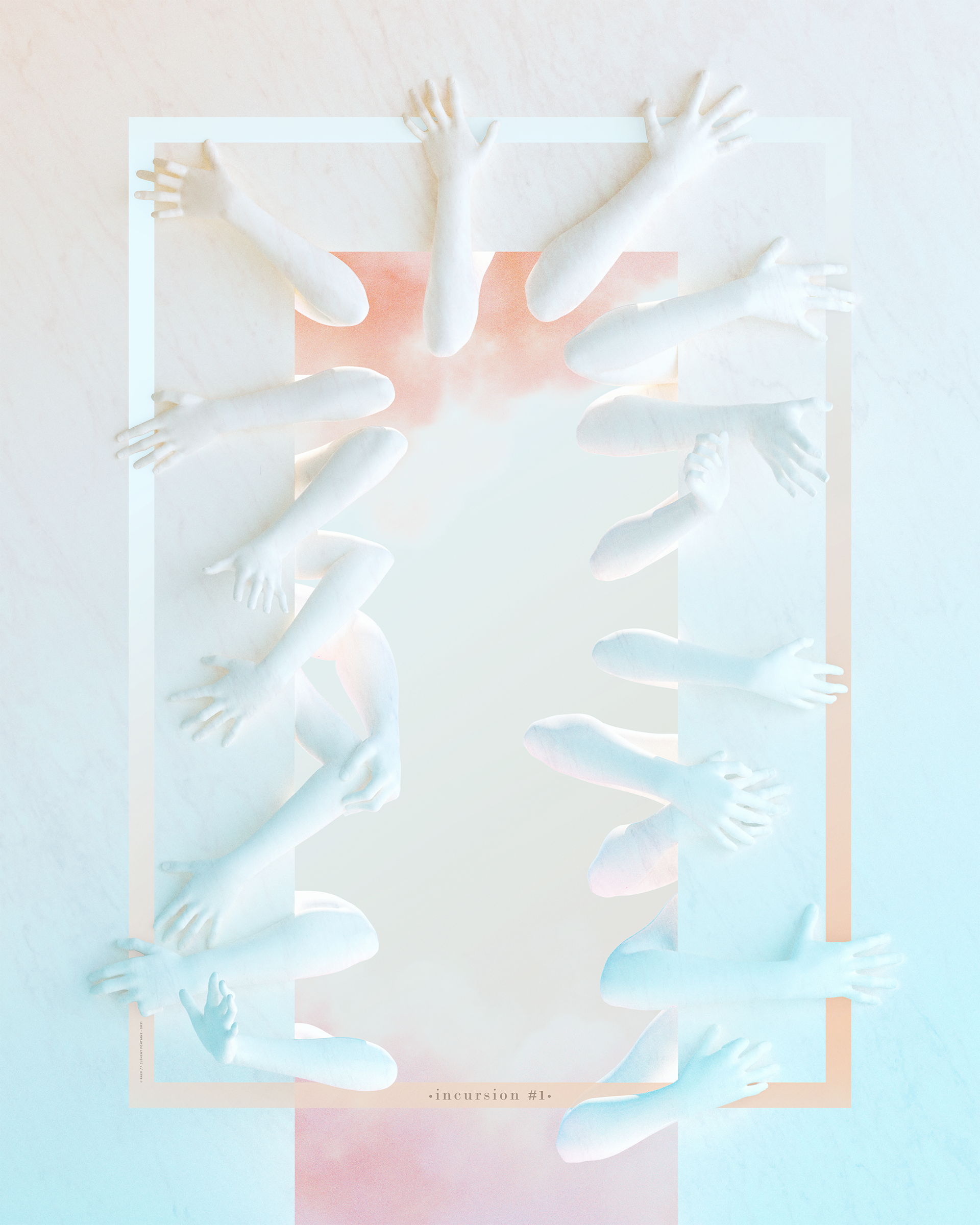
The alteration of the human body is the central element of my practice. I use it as a plastic form to structure the image, create lines of tension, or inject dynamism. Posture and gesture serve as a visual guide, creating an immediate connection with the observer.
Each scene is fully modeled, staged, and lit manually within a 3D environment. I utilize procedural tools, notably for fragmentation or the creation of custom shaders, to ensure total physical and technical consistency. By mastering every step of the production chain, I transform digital simulation into a tangible and durable visual object.
Specifically calibrated for Fine Art printing, my series find expression exclusively through the physical medium. This technical rigor fosters a genuine sense of proximity with the artwork: regardless of the exhibition format, the precision of the print reveals every micro-detail, inviting the viewer to step as close as possible, even from a very short distance. Overall dimensions remain adaptable to the scenography of the space.

BENEATH
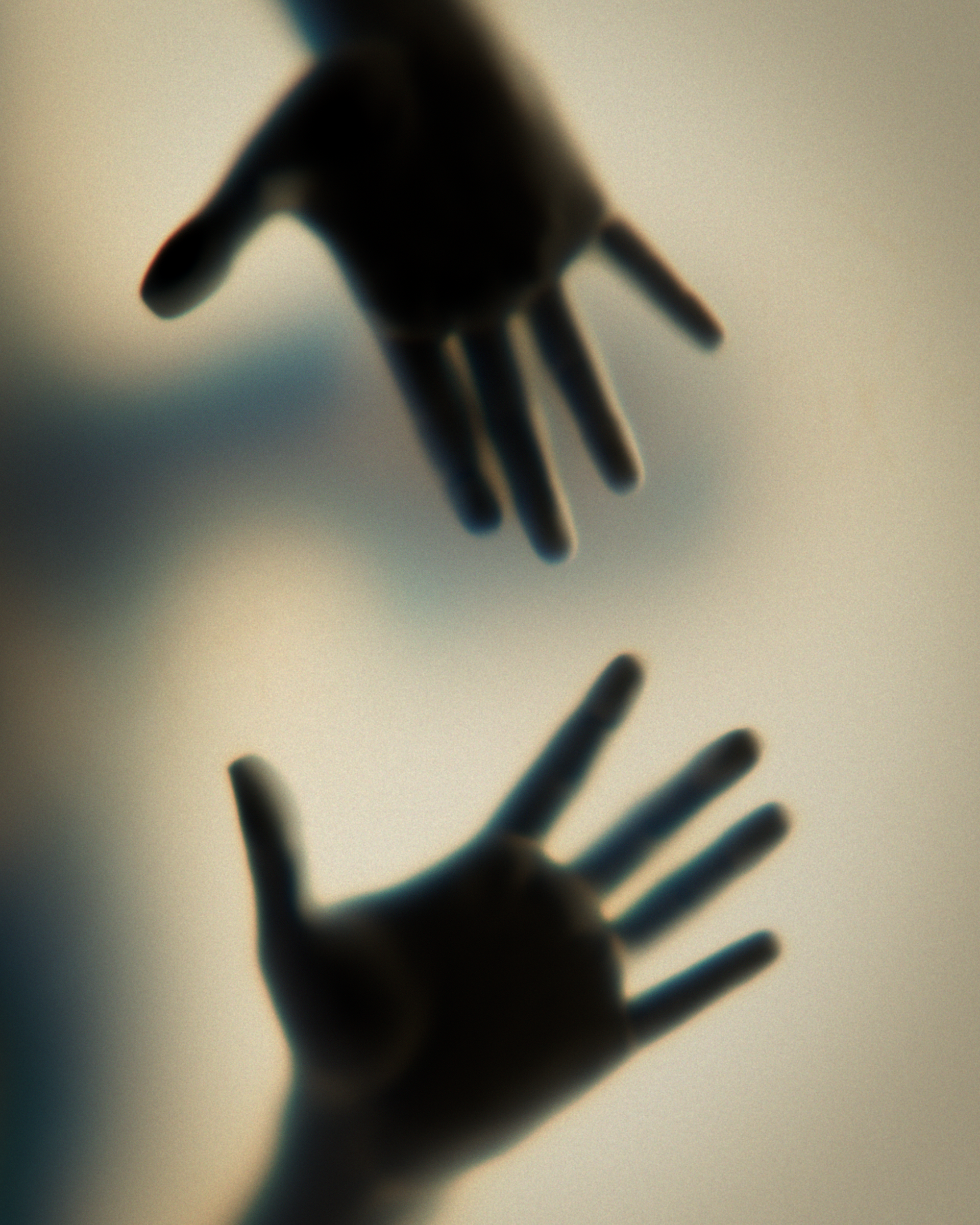
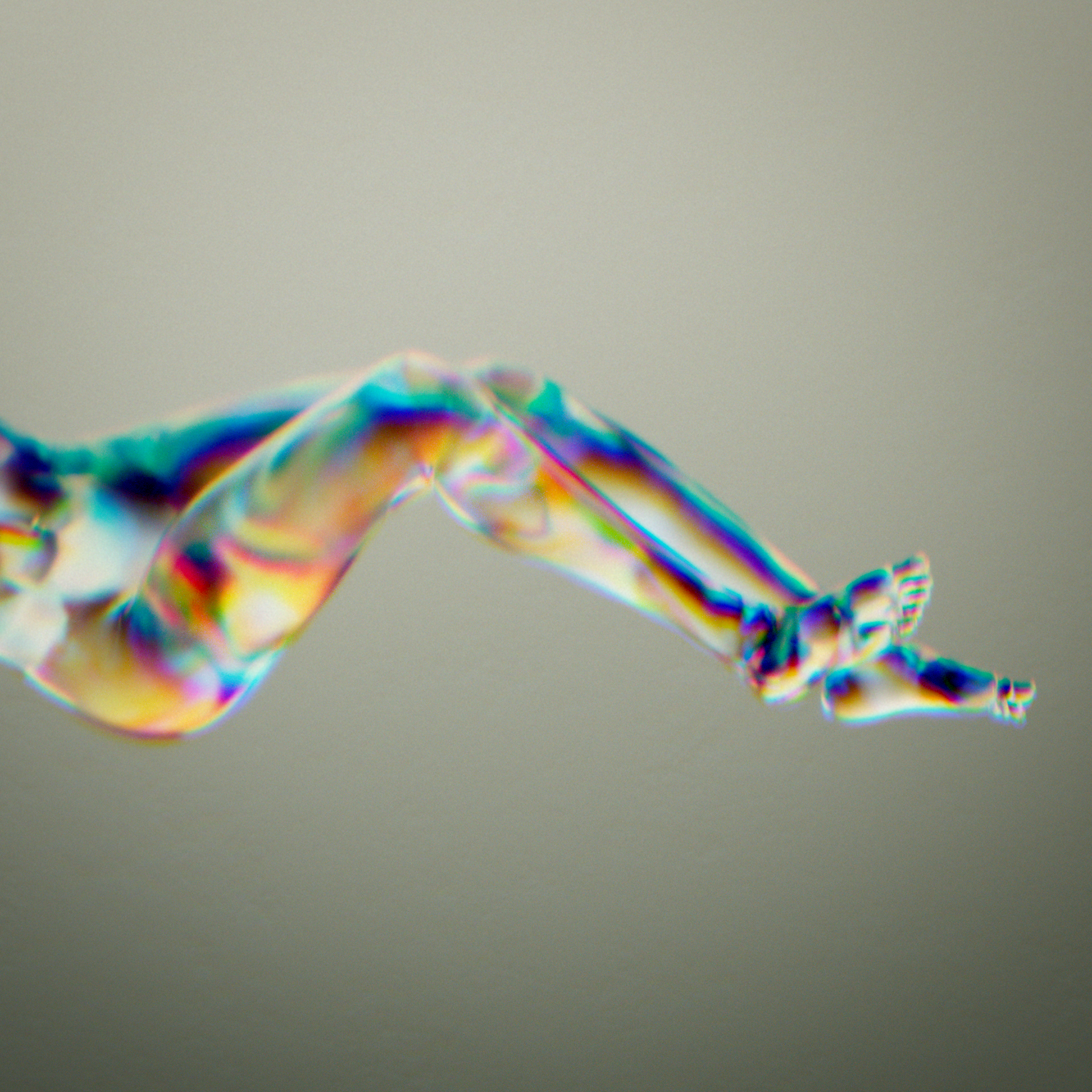
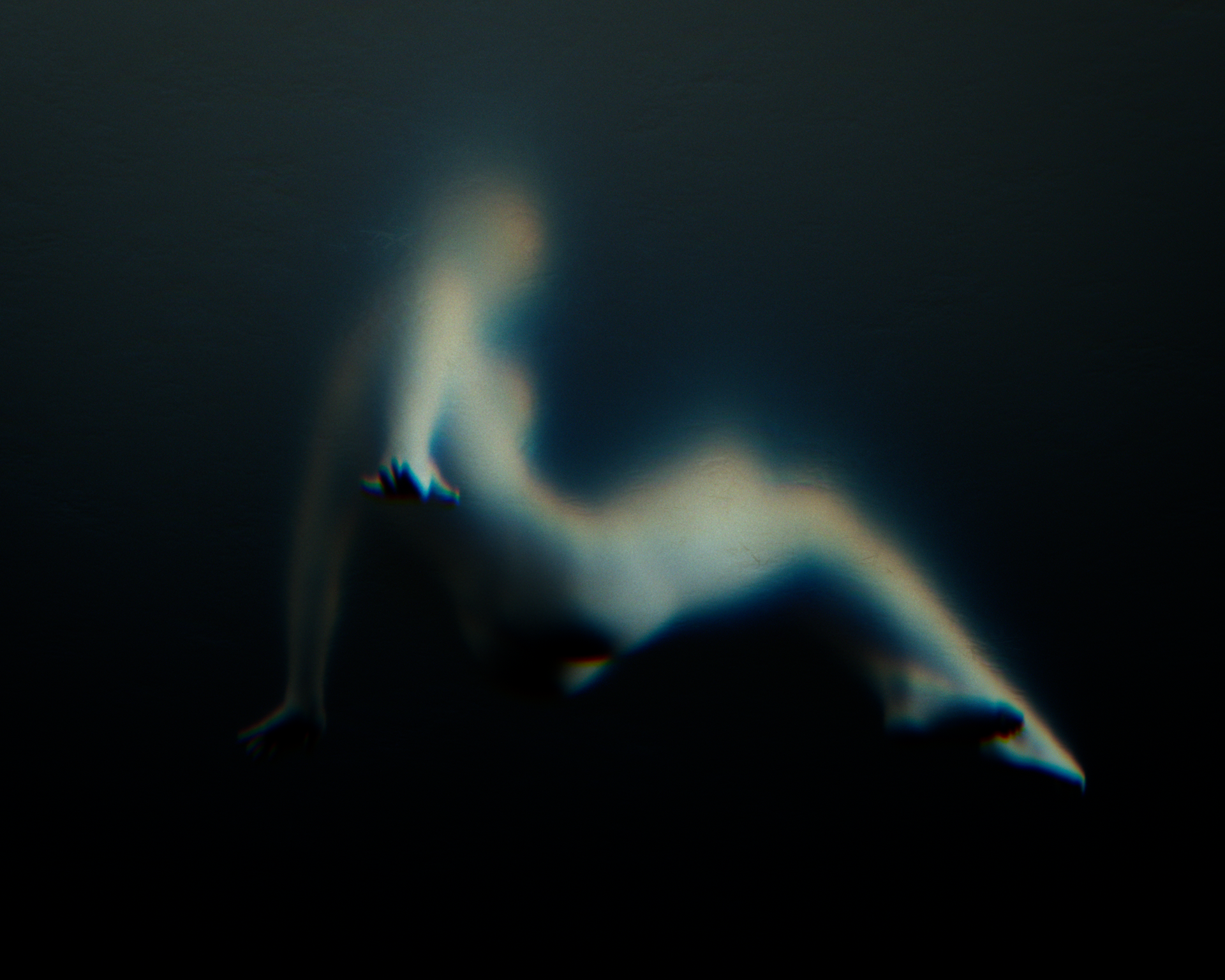
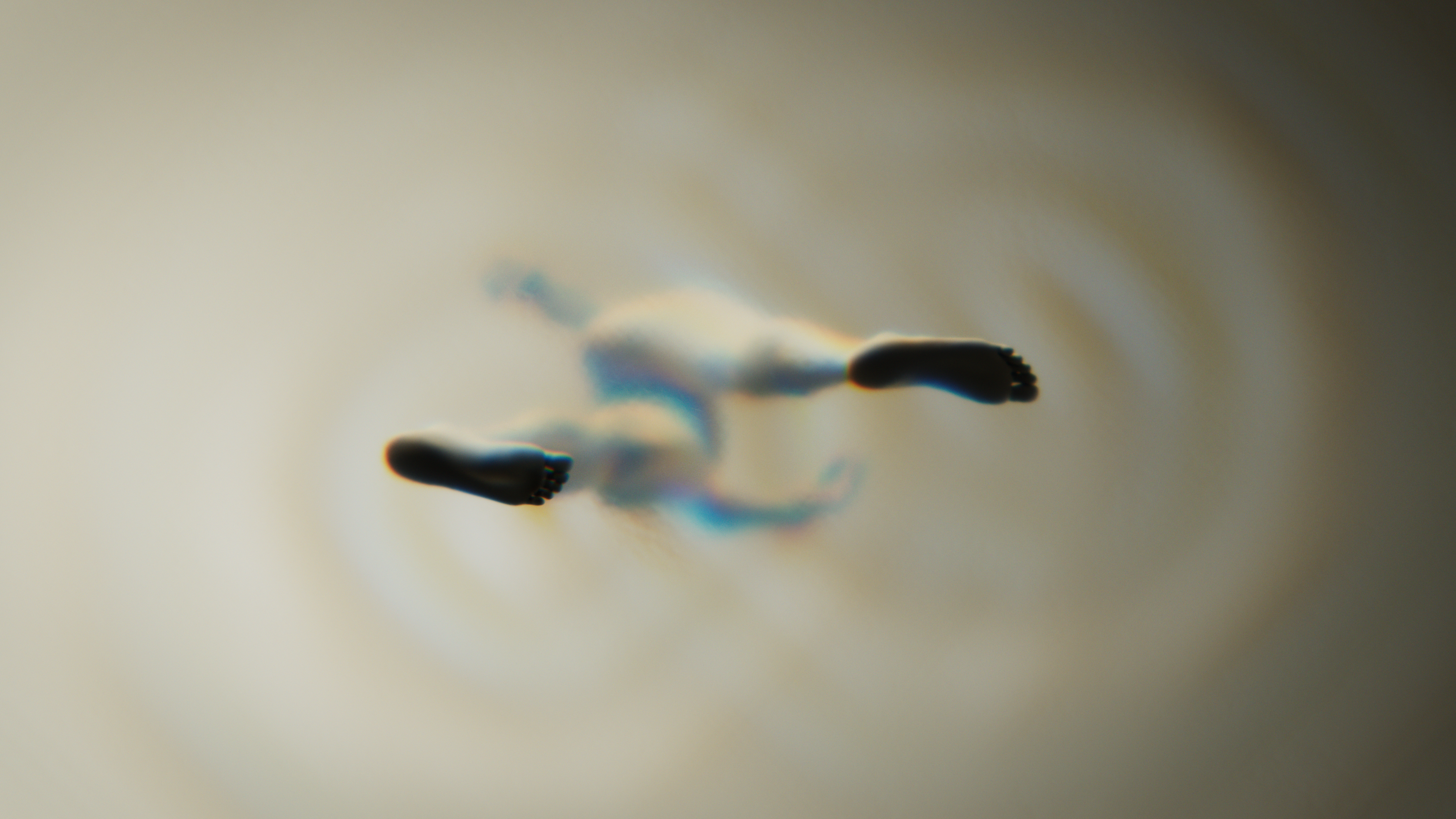
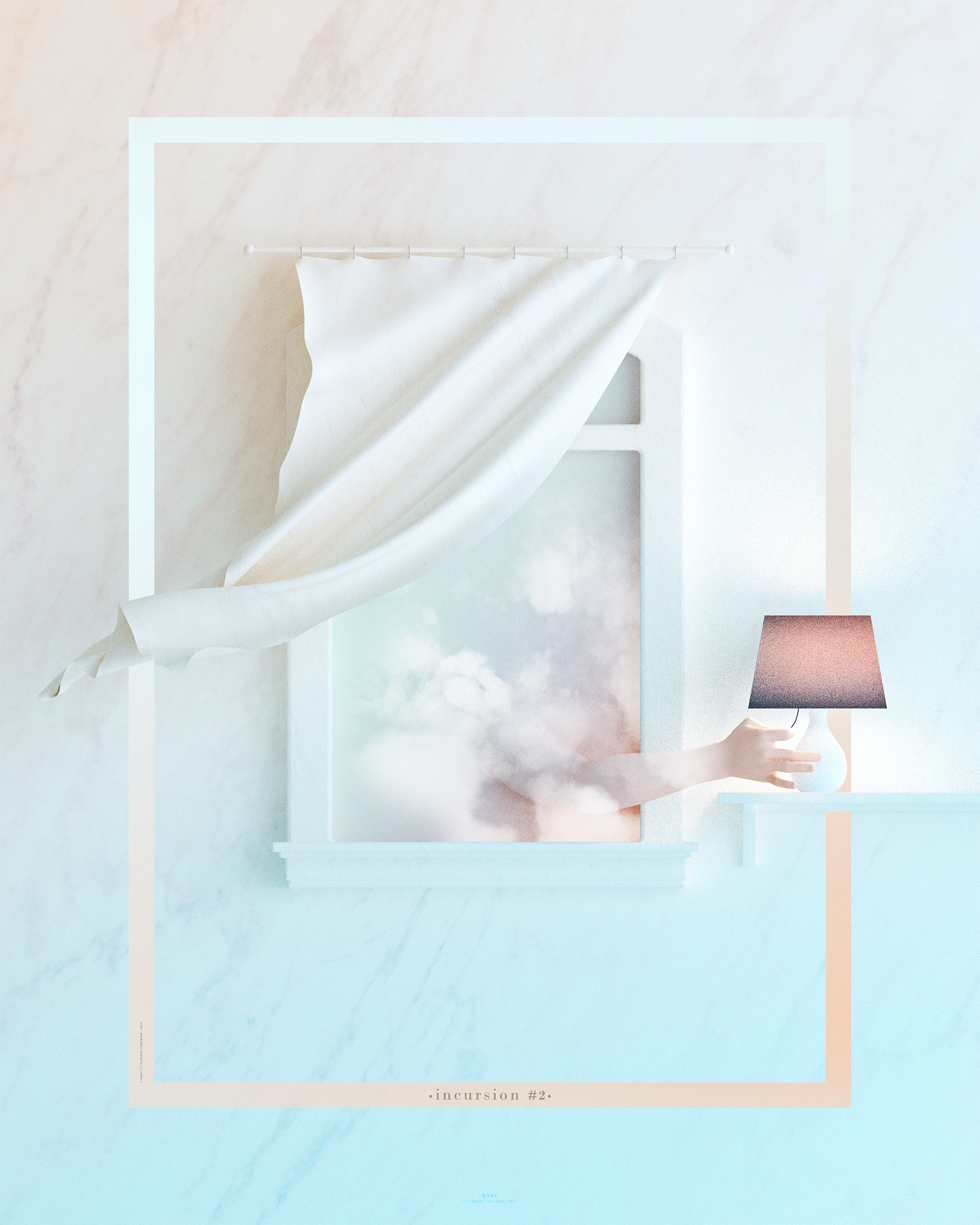
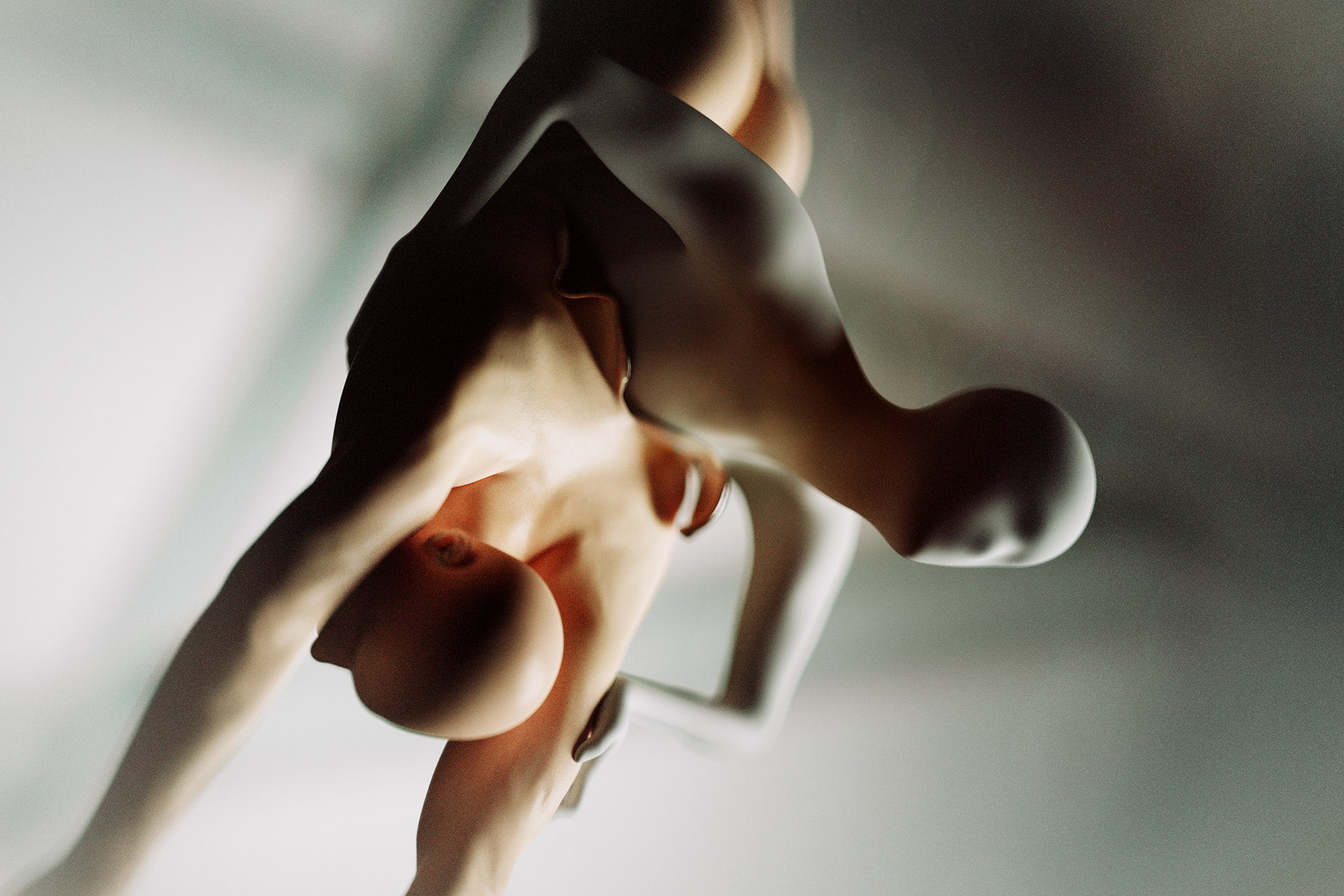
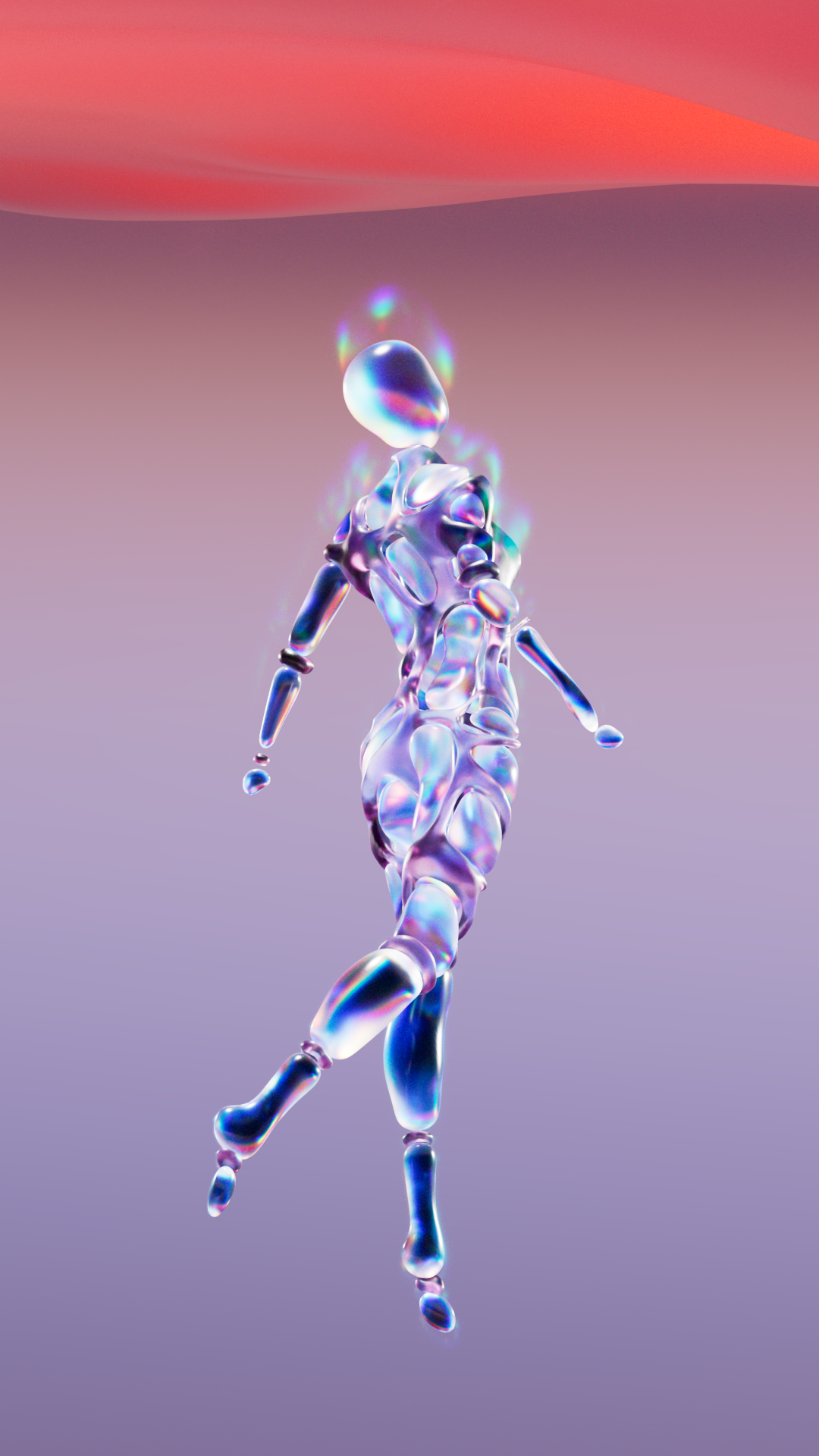
Through this triptych, a space of transition is explored. A fluid threshold suspended somewhere between aquatic immersion, the twilight of the subconscious, and dreamlike detachment. Blur, distortions, and chromatic aberration act here as filters of an altered reality. They evoke the resistance of a medium, be it water, glass, or distance, that deforms matter to reveal its sensitive imprint.


UNWRAP
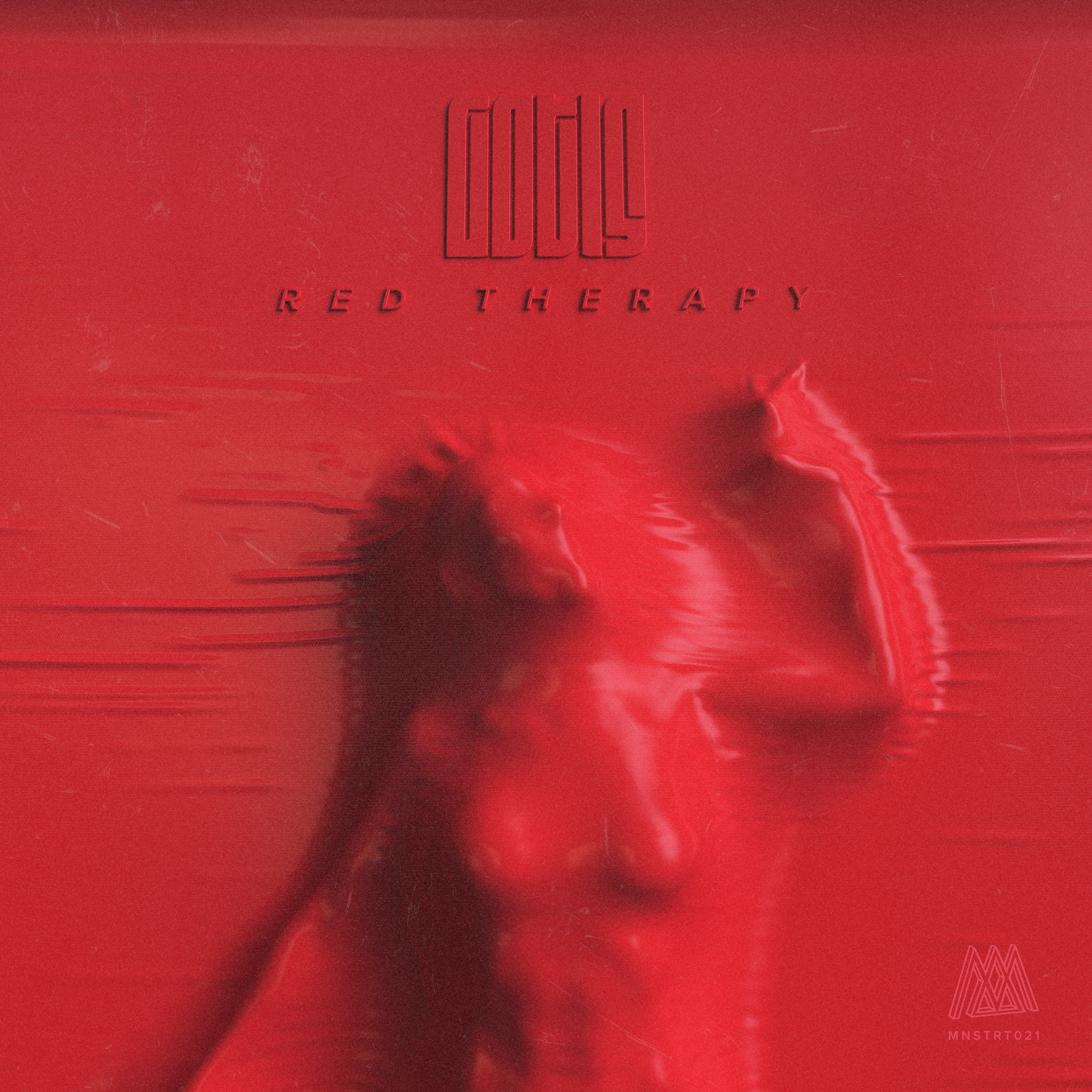
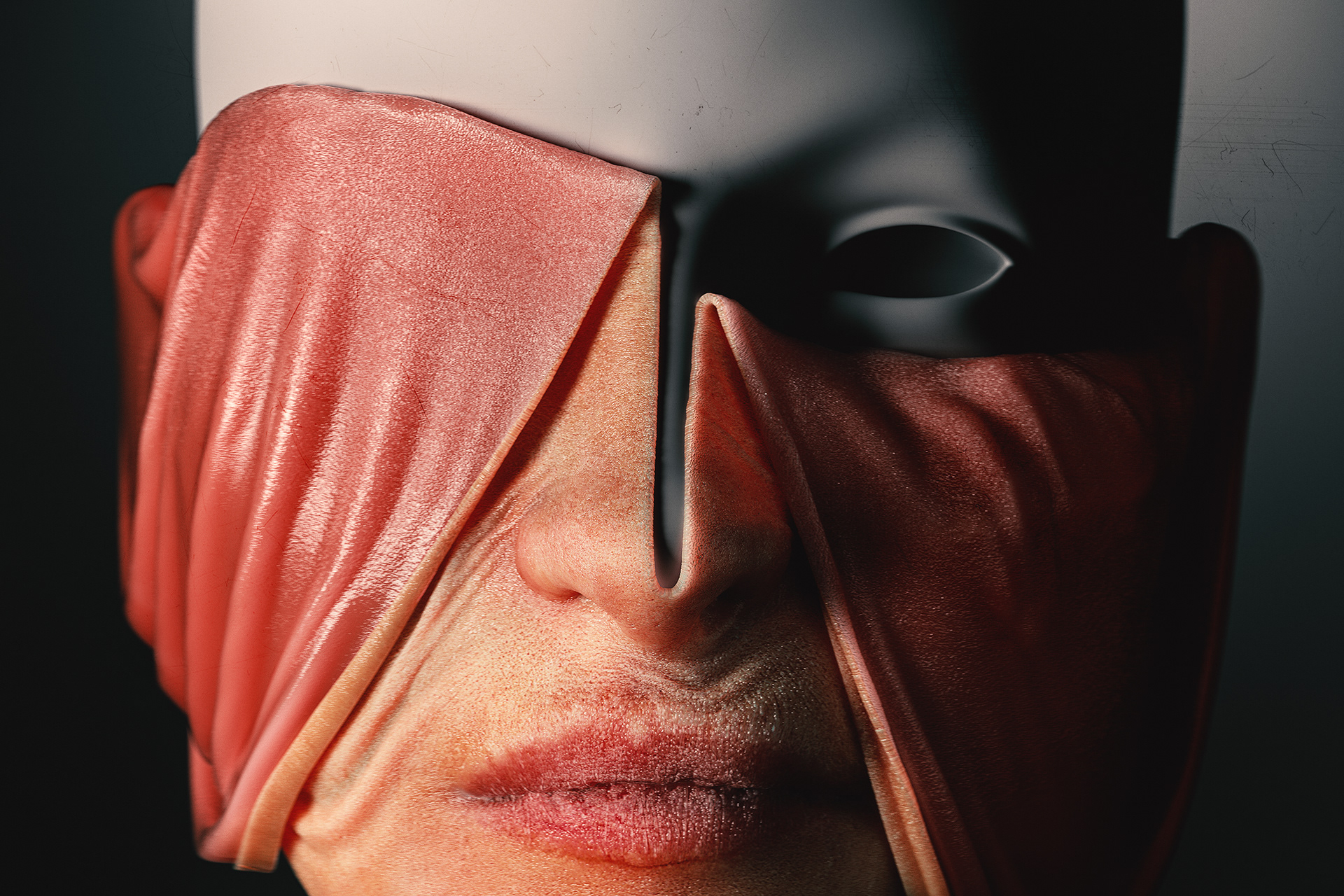
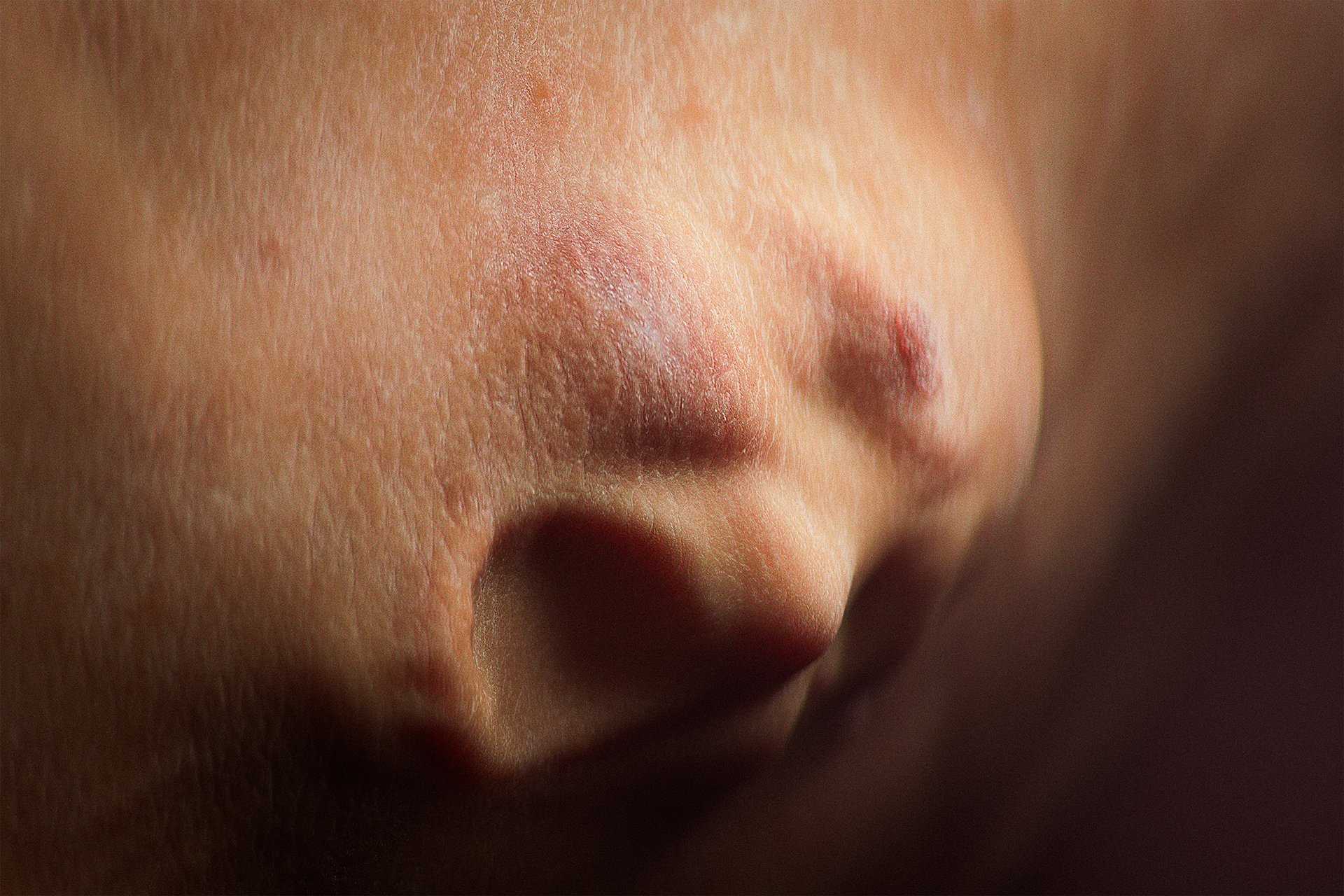
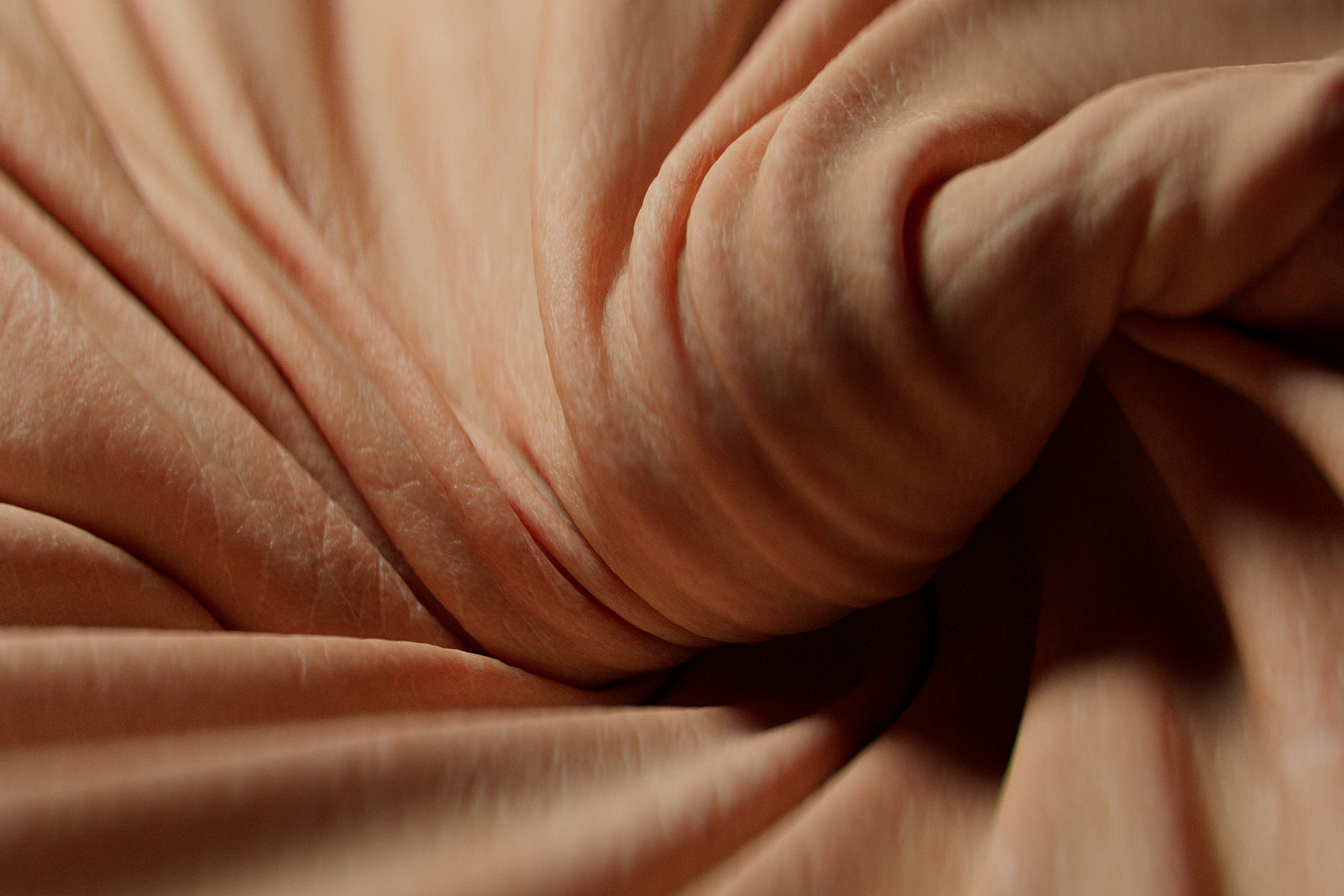
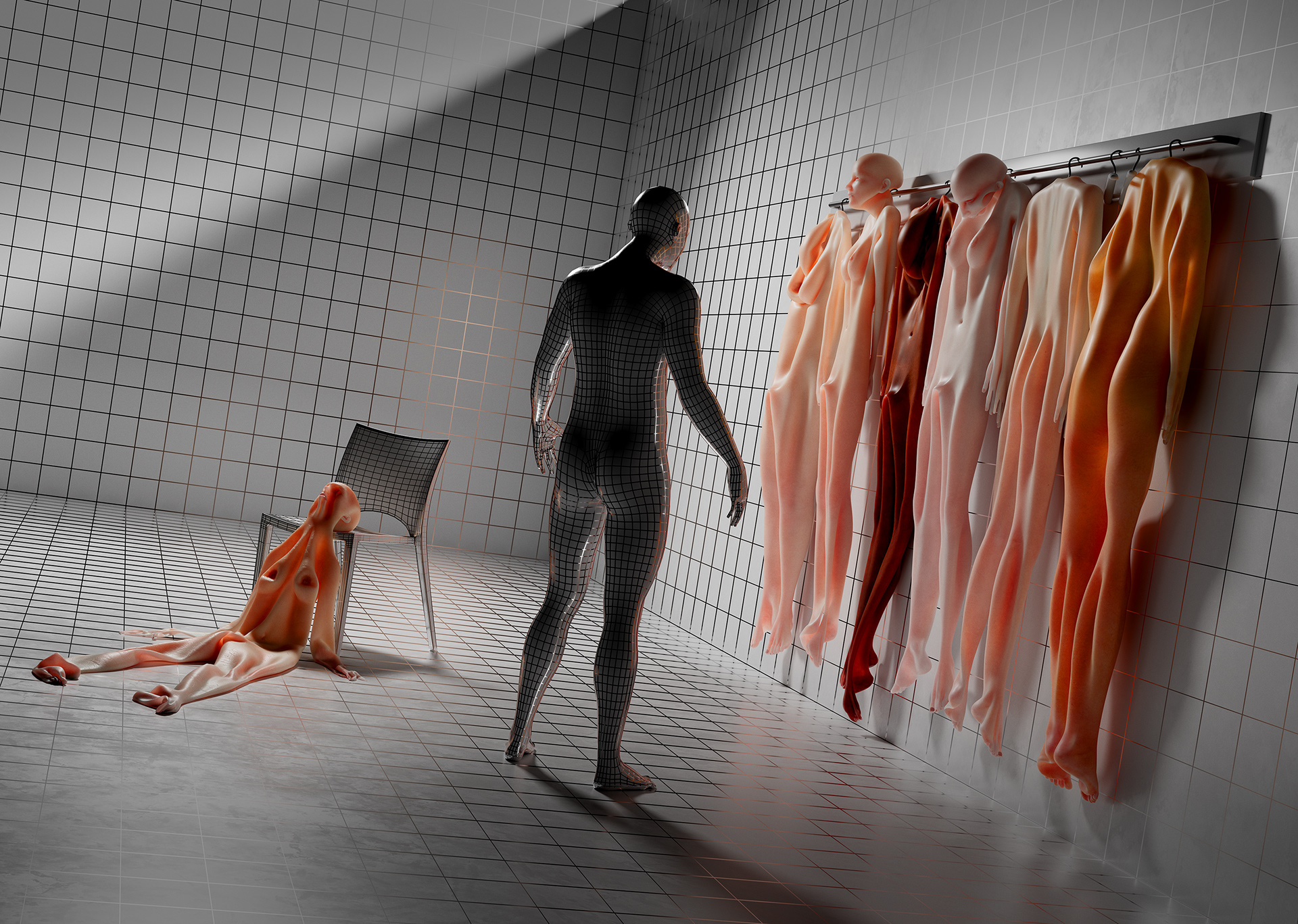
Identity becomes a garment chosen within an aesthetic that is both clinical and carnal. Borrowed directly from the technical vocabulary of 3D creation, the title “Unwrap” (the act of unfolding textures and mapping them onto polygons) lays the groundwork for a reflection on the plasticity of our appearances. Through suspended, draped, or pleated skin textures, these compositions explore the fragility of what we reveal to the world.
The intention rests on our universal need for metamorphosis. Whether chosen for the day, adjusted over a face to hide behind, tortured, or torn, skin is here treated as a costume. Through this play of folds and molts, the bodily envelope becomes malleable, adapting to our desires for transformation.
By staging this great unfolding of bodies, the series highlights a simple reality: everyone moves forward masked. Behind these interchangeable envelopes lies an aspiration: the ability to reinvent oneself and, at times, the desire to be something else.

PEBBLES
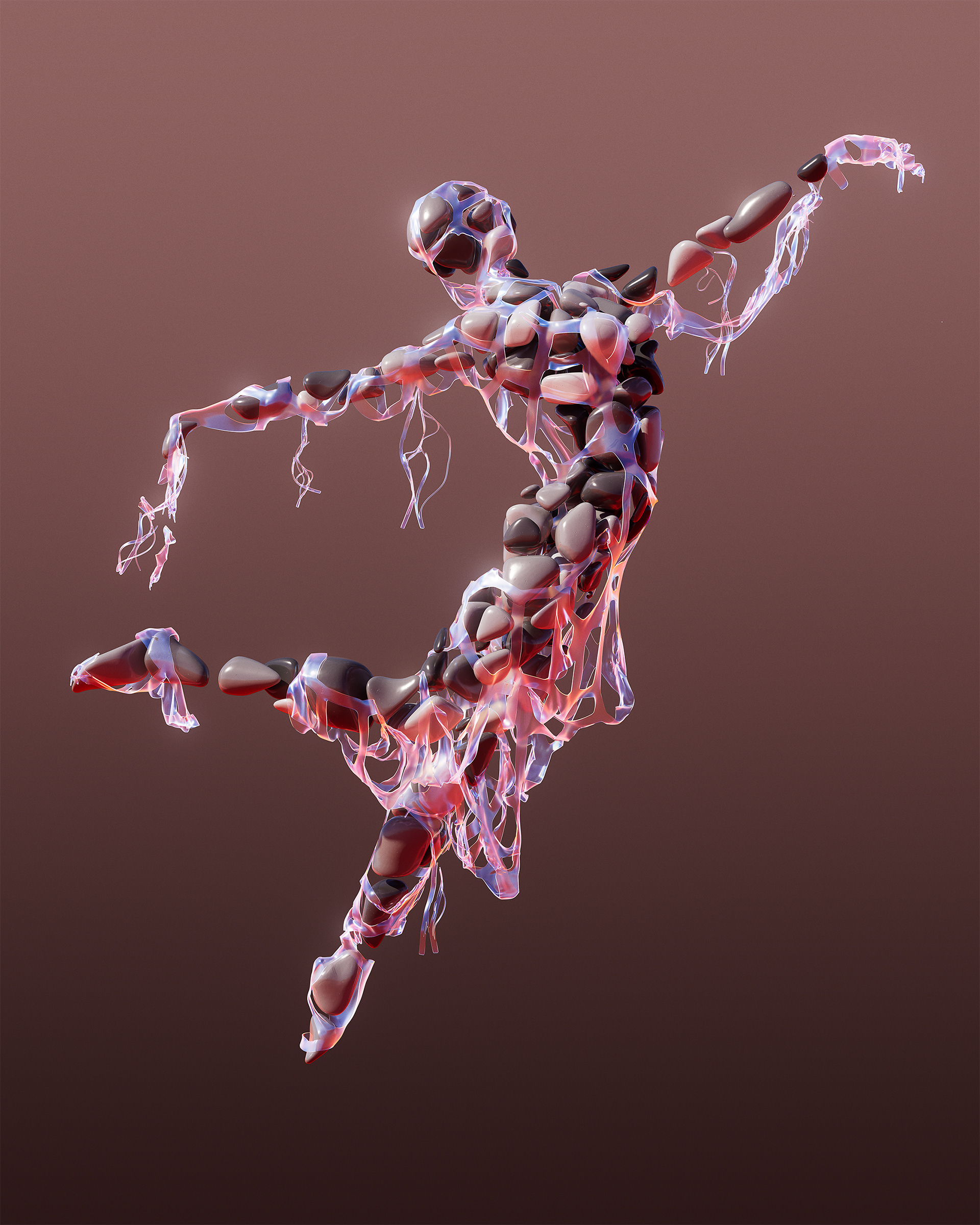
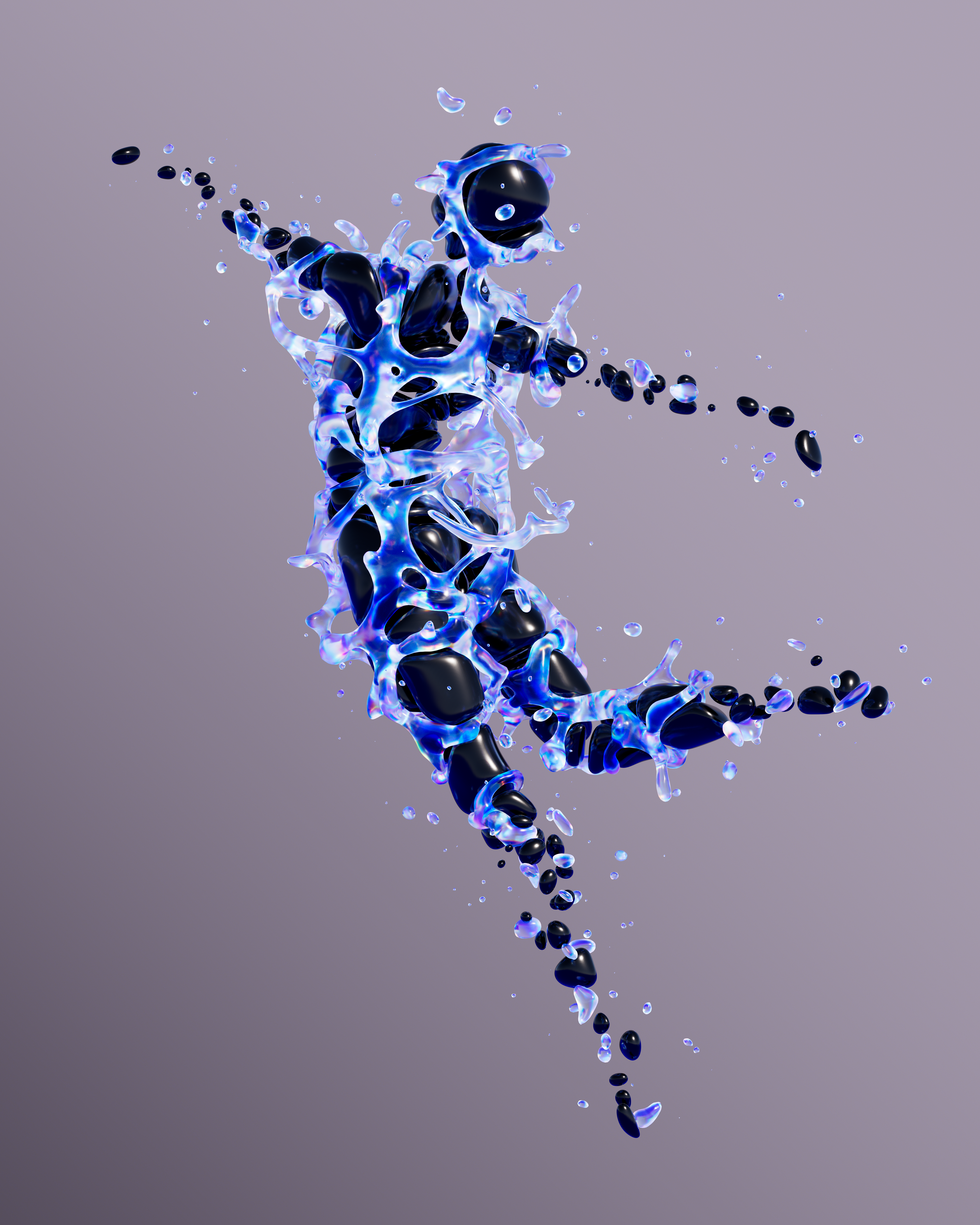
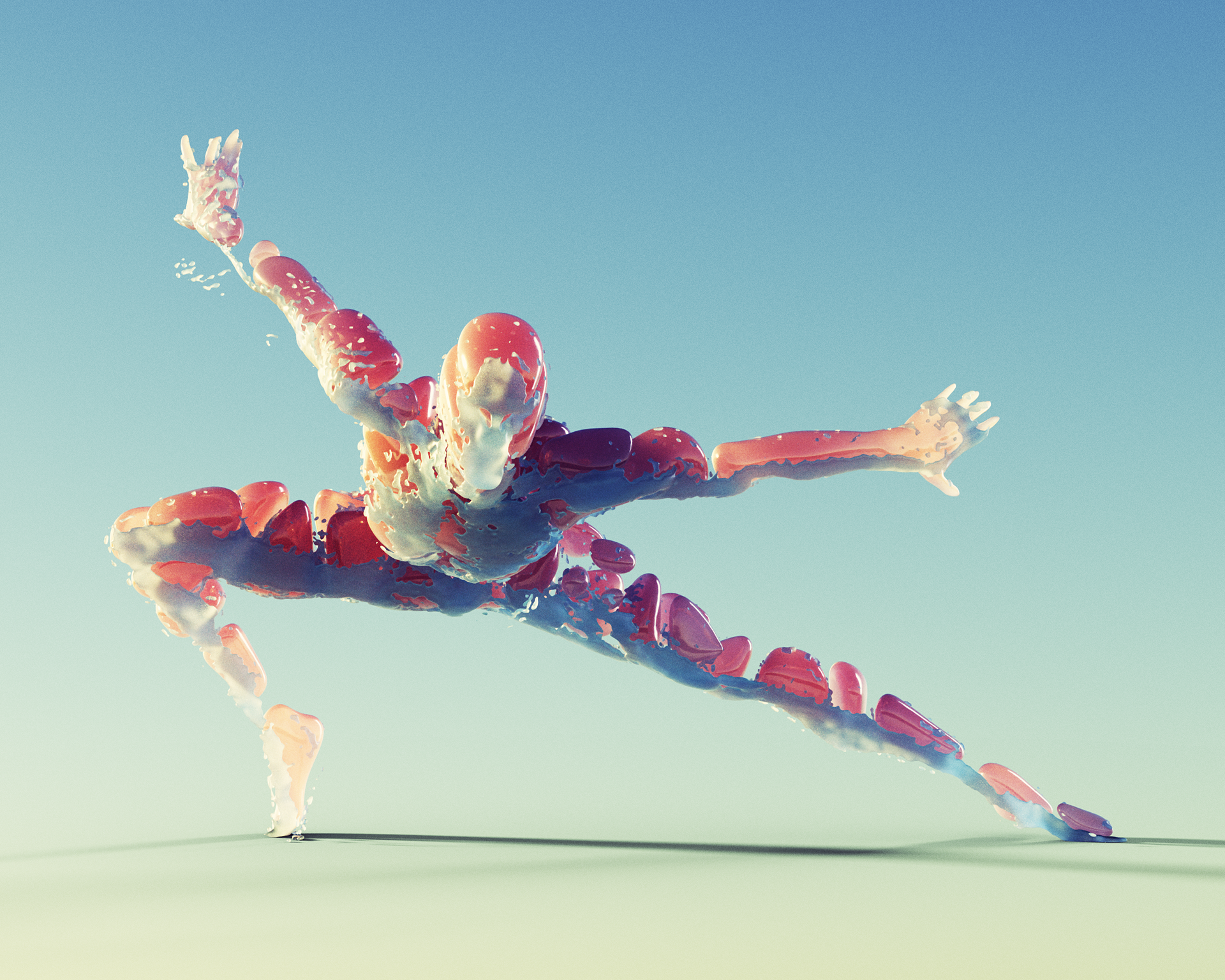
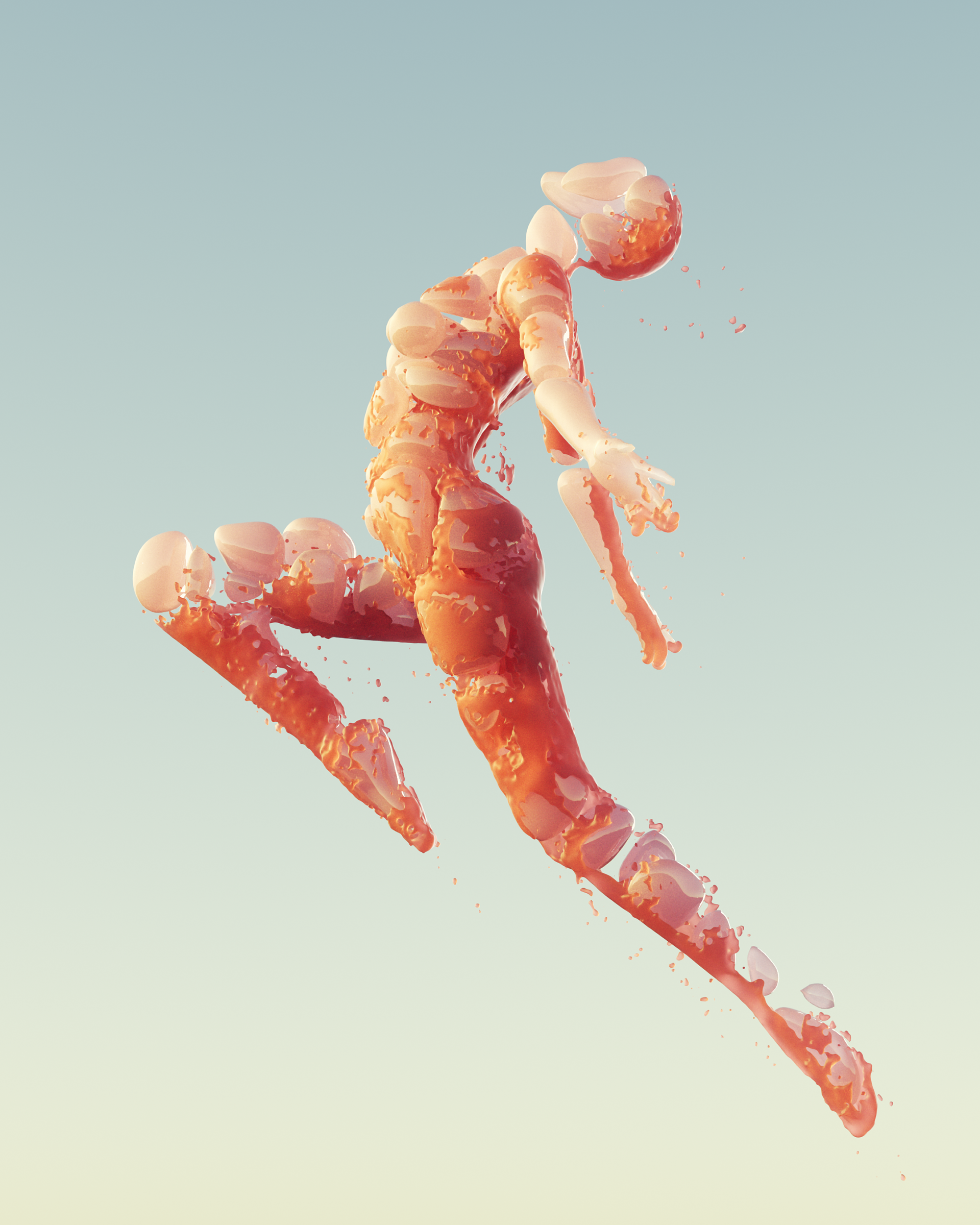
This theme explores the body through a hybrid form, composed of mineral elements assembled like a fragmented anatomy. The volumes evoke muscles and joints without ever seeking realism.
A liquid material runs through these bodies and appears to be the only element subject to gravity. It flows, overflows, binds, or destabilizes the structure, introducing a tension between solidity and instability.
The deliberately dynamic poses guide the viewer’s gaze and suggest movement, while leaving the image frozen in a suspended state, between contained energy and loss of control.

AFTER THEM
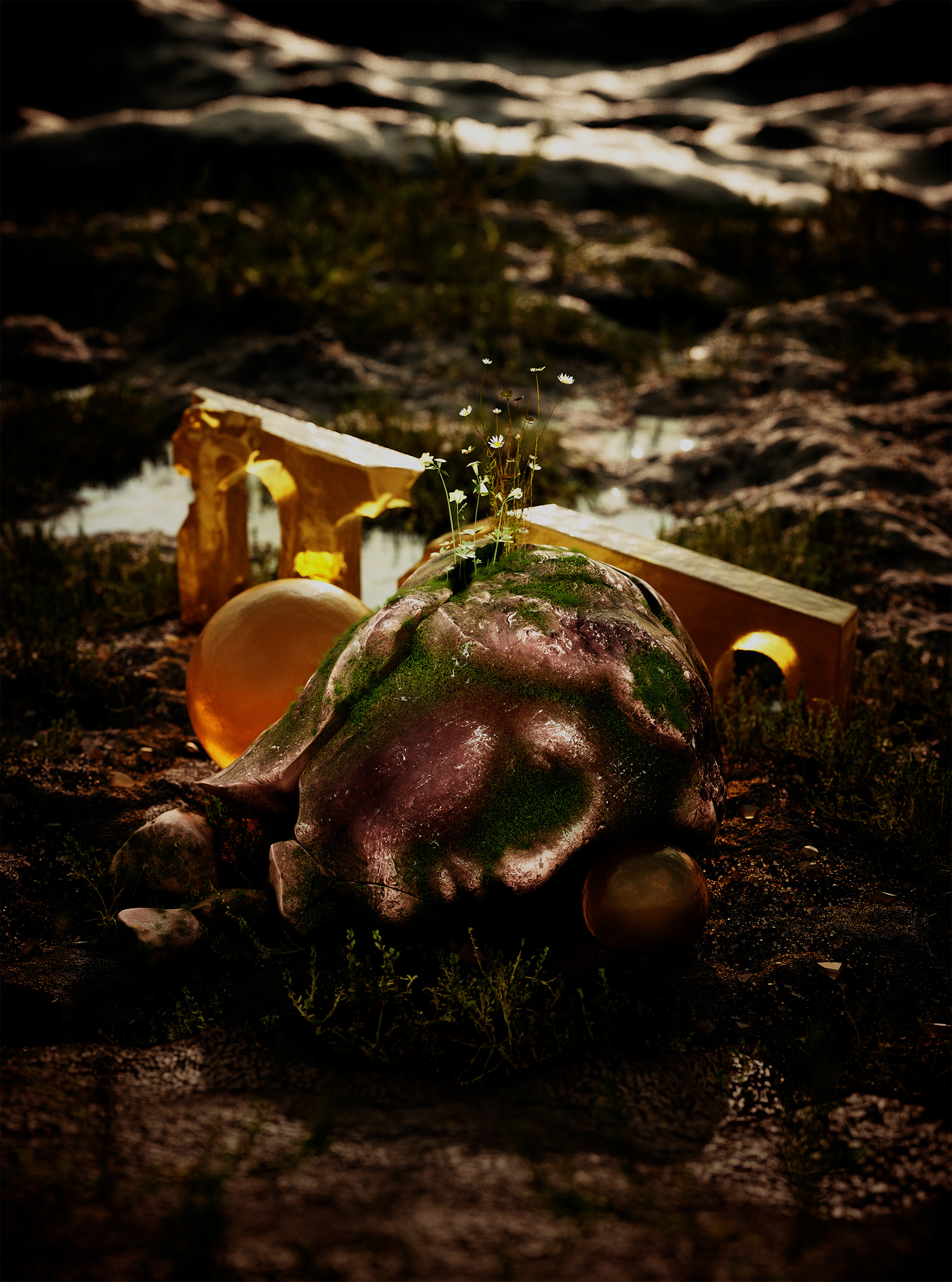
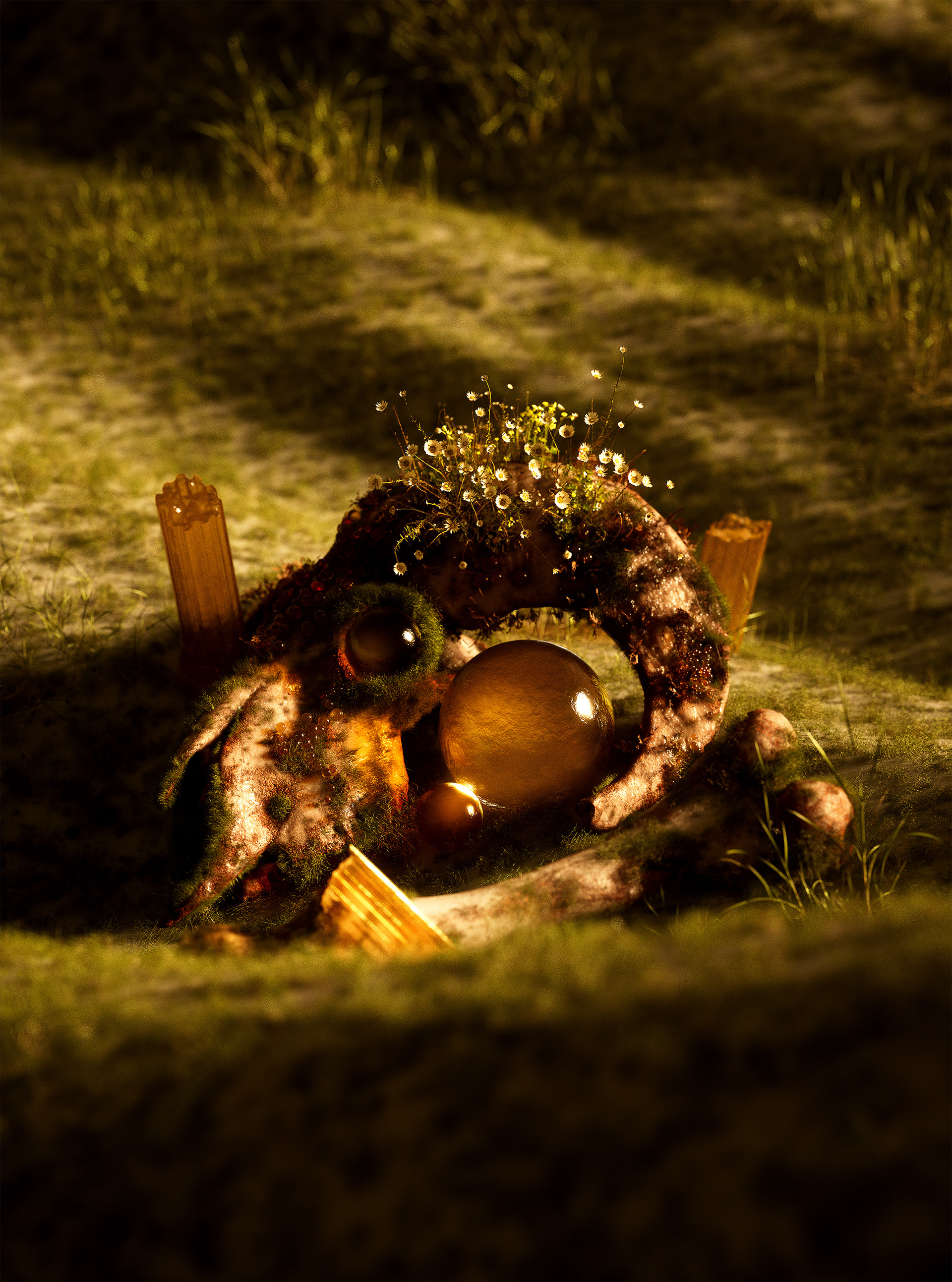
This series of still lifes treats alteration as a field of plastic experimentation. By making dilapidated remains (a skeletal skull, encroaching moss, a broken statue) coexist with more geometric structures, these compositions bear witness to a world where time has completed its work.
The intention is purely visual: to confront the roughness of bone and stone with the purity of geometric elements in amber resin.

INFLATION
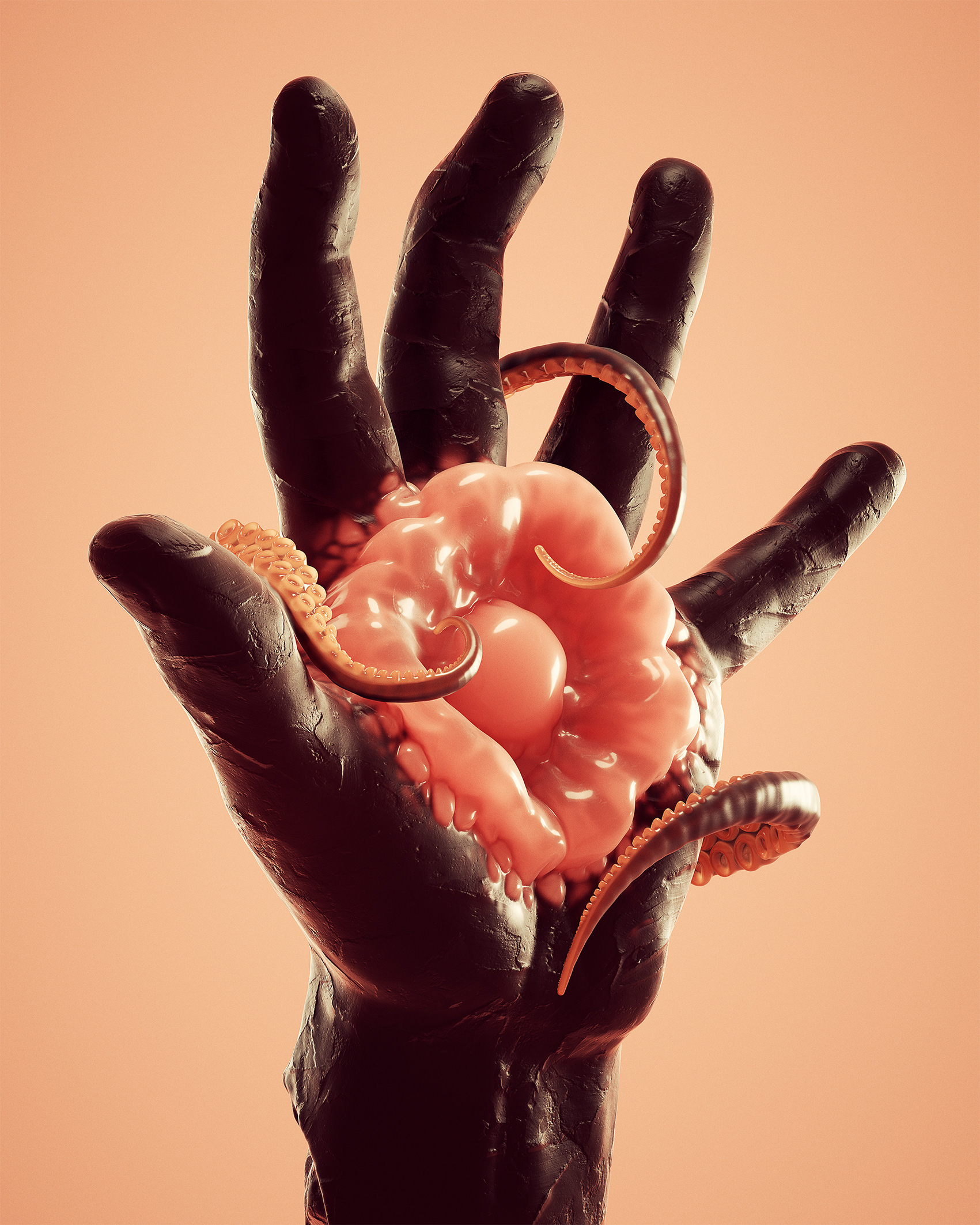
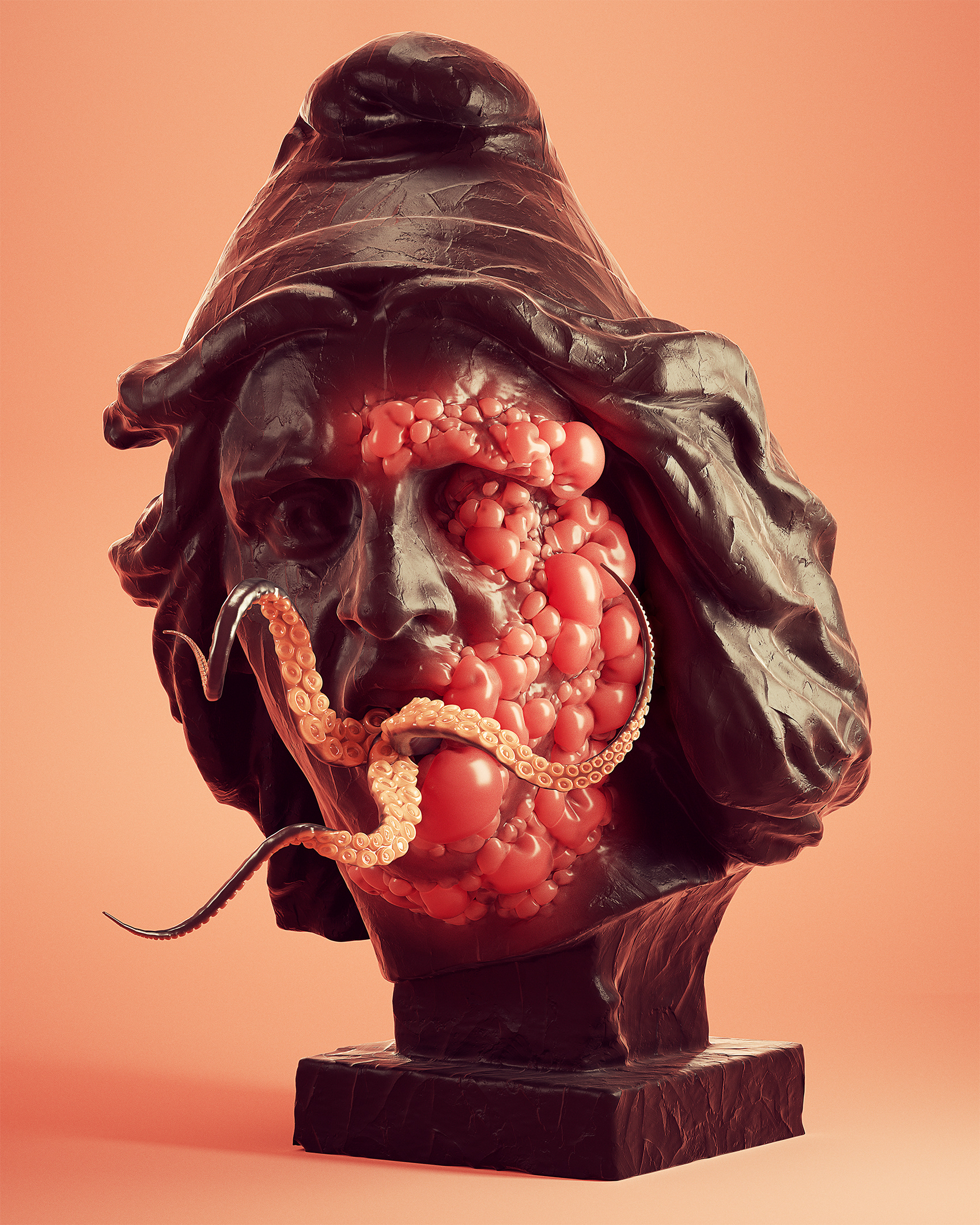
The relief of La Marseillaise on the Arc de Triomphe serves here as a starting point for a tumoral deformation. Clay-like forms swell, revealing excrescences and tentacles, as if the statue were traversed by an uncontrollable inner life. The historical object becomes a vulnerable, altered, sick body.
The aesthetic evokes both historical sculpture and Lovecraftian imagery, existing in an in-between space where the familiar tips into the strange. This is not a direct political statement, but rather a tension between heritage, symbolic power, and fragility, leaving the viewer free to project their own interpretations.

THORN
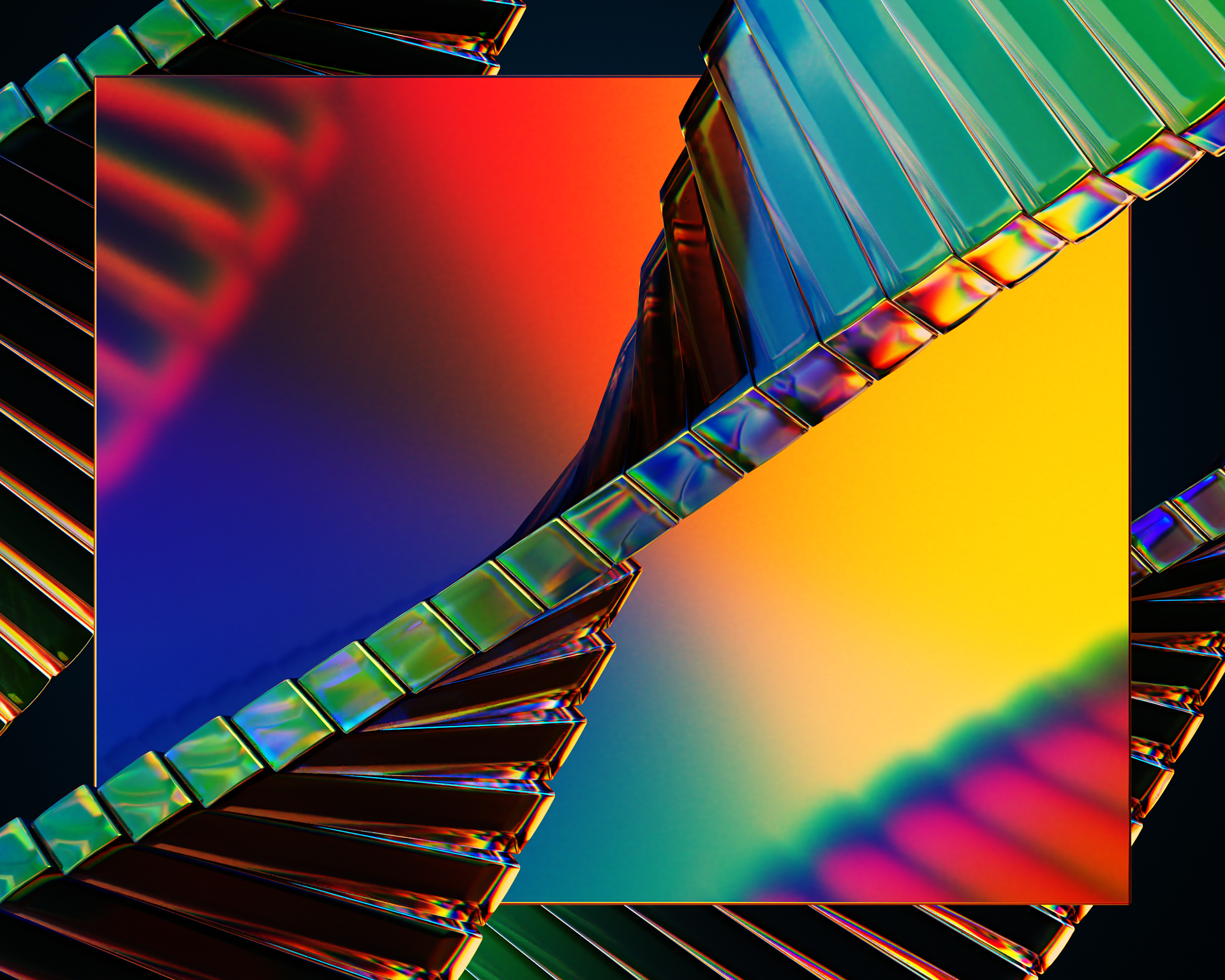
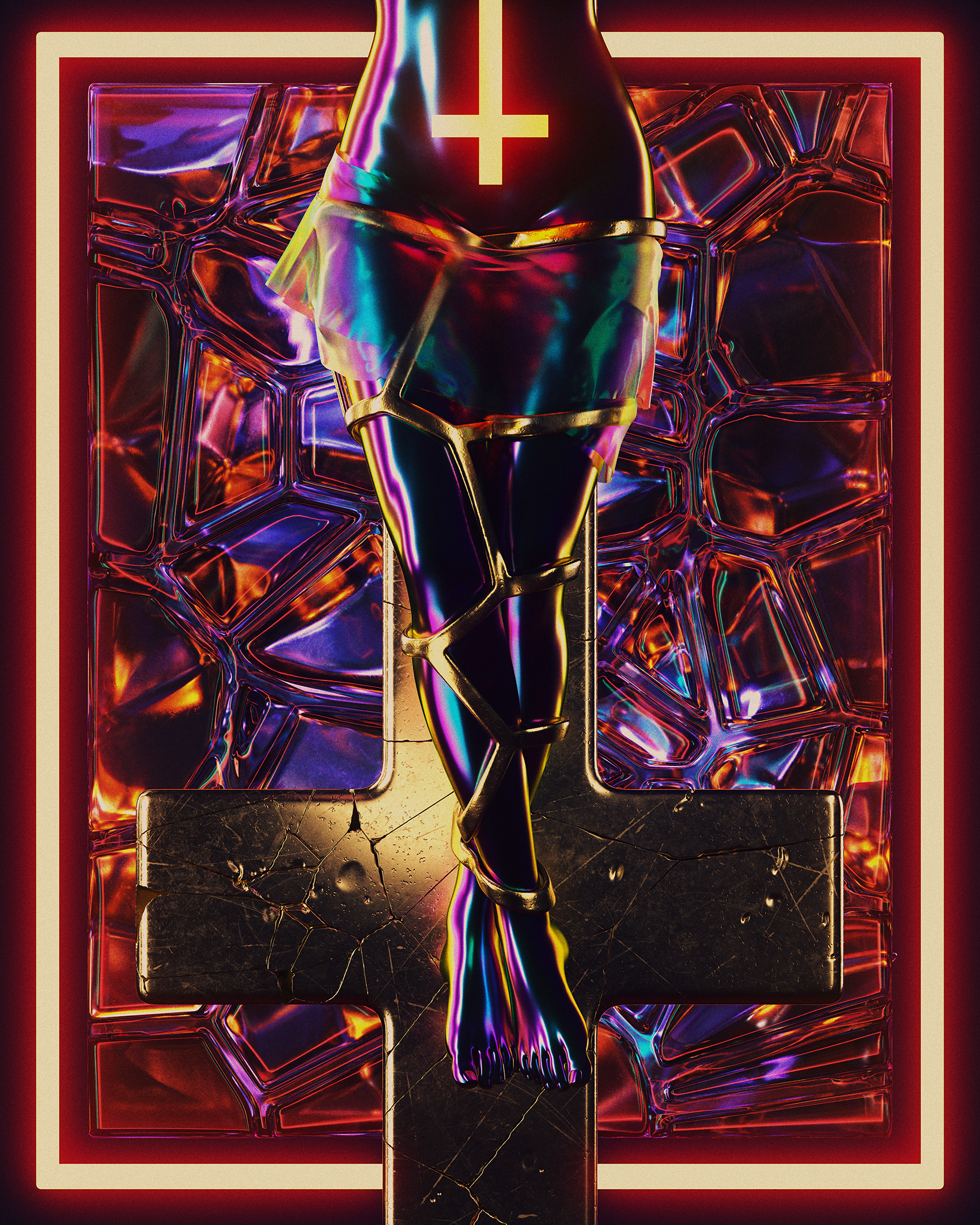
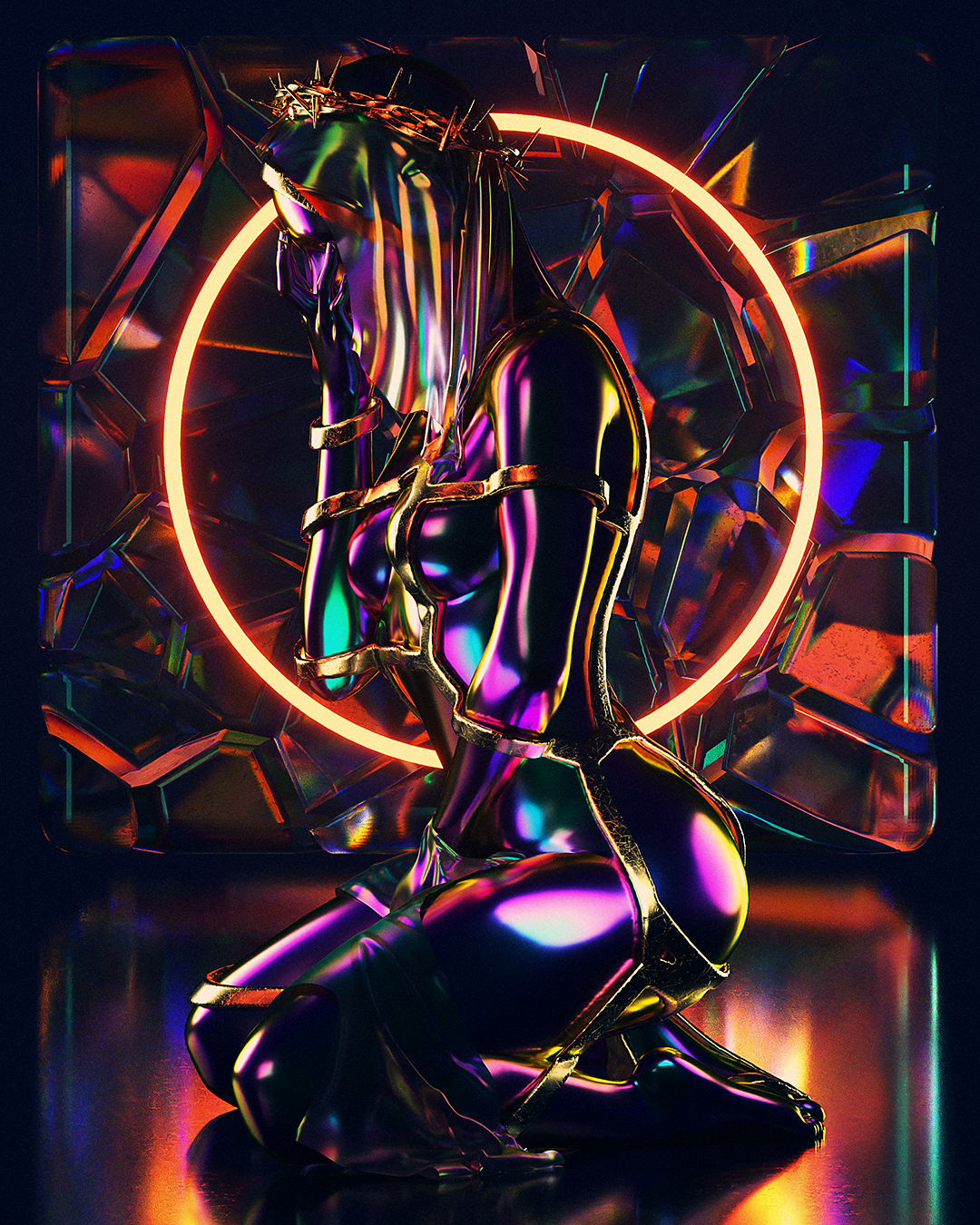
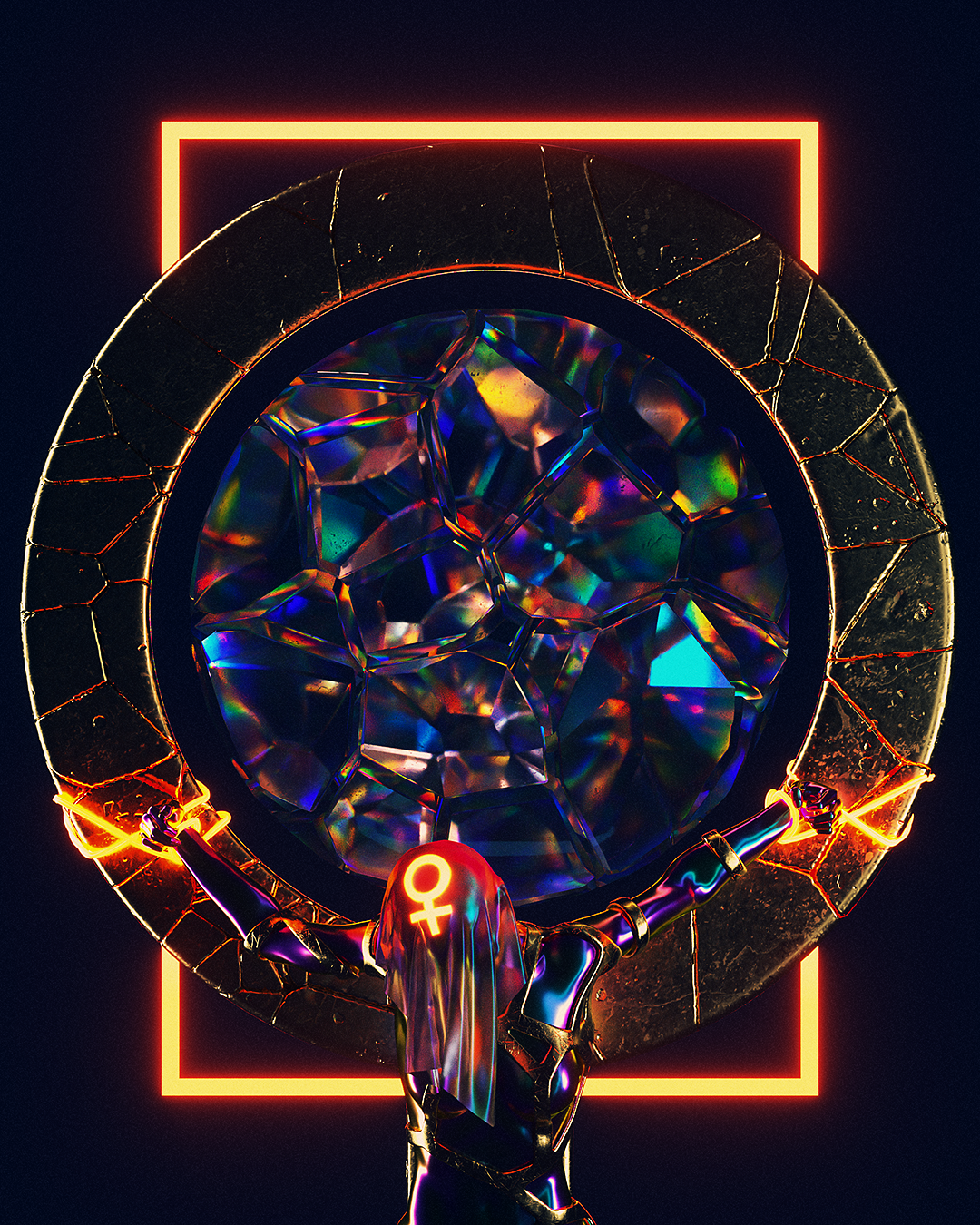
The sacred becomes a prison within a cyberpunk aesthetic. Through female bodies with iridescent textures, these compositions subvert the codes of religious iconography to highlight constraint.
The intention rests on the forced immobility of these robotic silhouettes, trapped in gilded metal structures that act as restraint devices. In this dark and fractured universe, the futuristic aesthetic is not a sign of progress, but the backdrop of a persistent alienation.
By placing ancestral symbols on ultra-modern bodies, the series underscores a brutal reality: despite tomorrow's fantasies, the condition of these icons remains hampered by age-old shackles.

PROJECTION
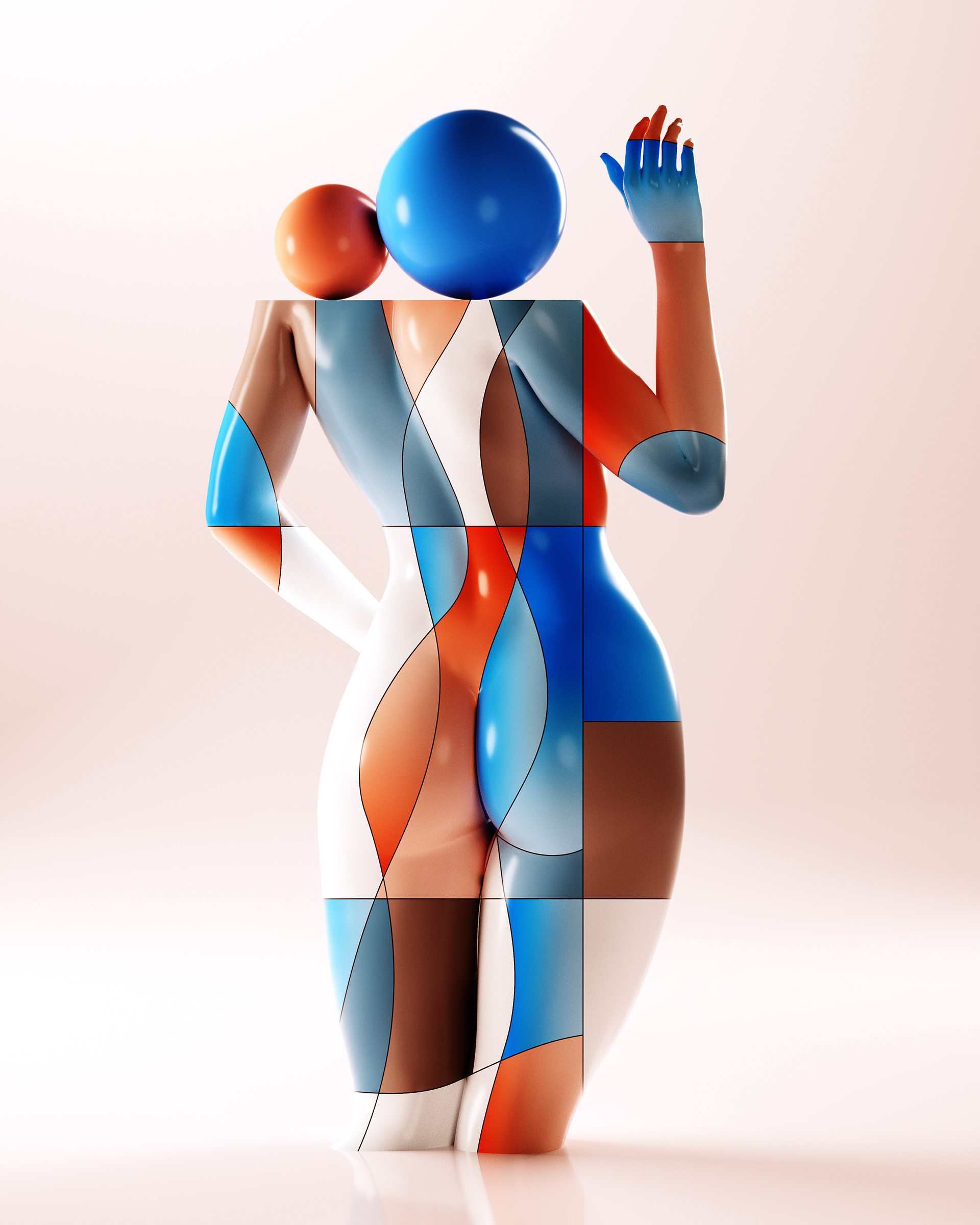
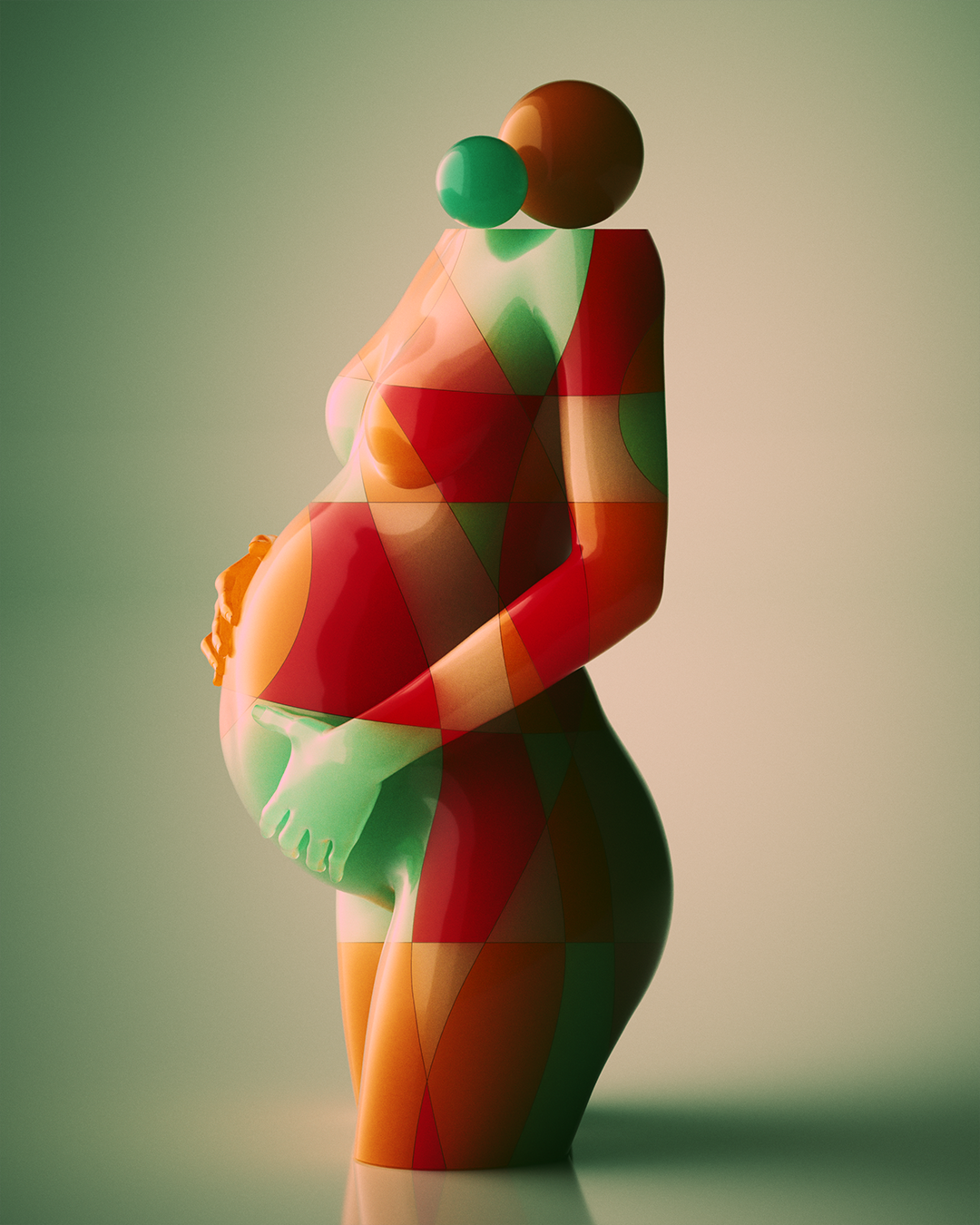
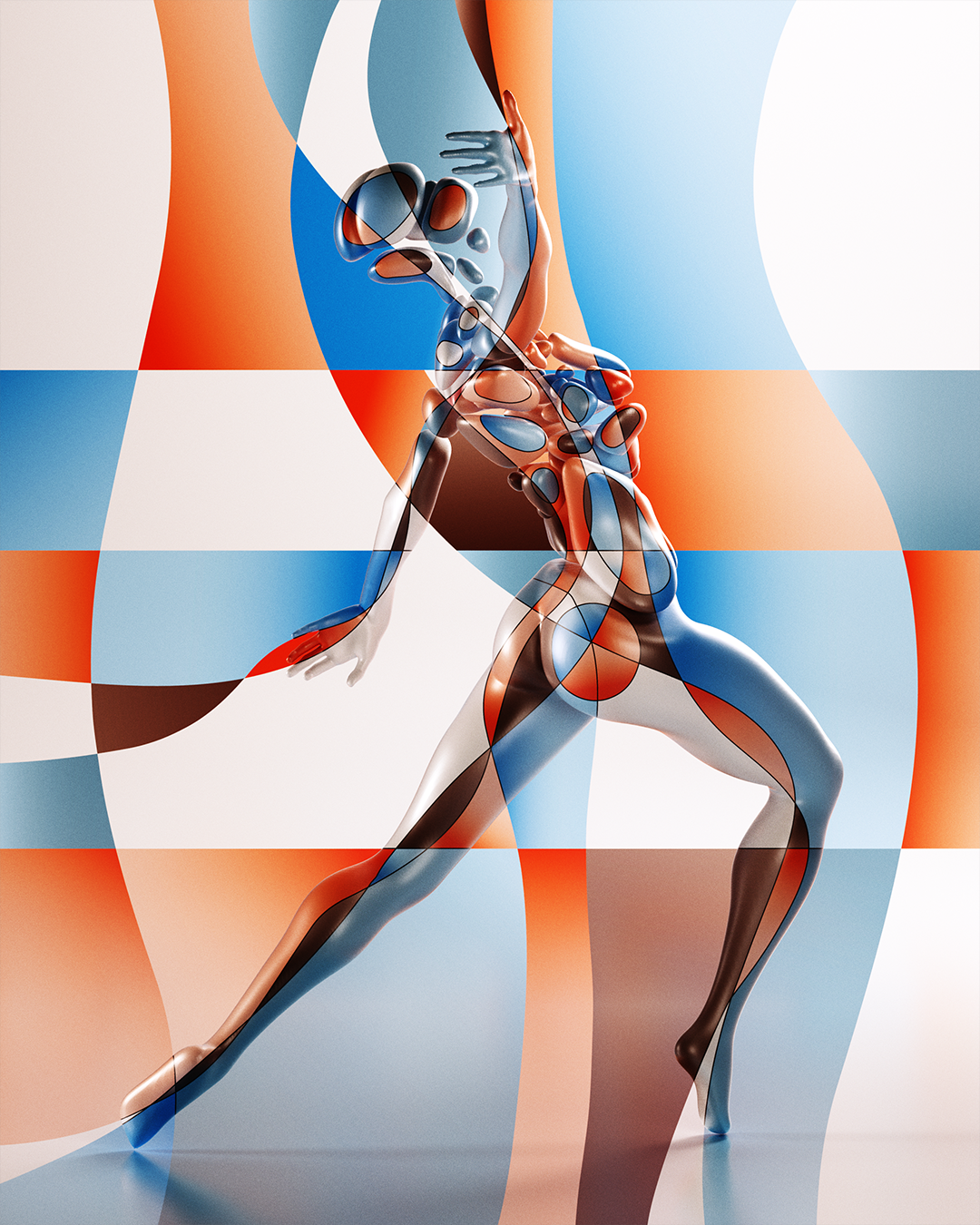
This theme explores the body as a projection surface. The volume is traversed by flat areas and projected abstract forms, sometimes perfectly rectilinear, which disrupt the reading of space and perspective. The textures function as fragments of autonomous reality: their boundaries, resembling puzzle pieces, suggest that another image of the body could exist beyond the one we perceive. The body thus becomes a site of superposition, between physical presence and mental construction.

BLOCKS
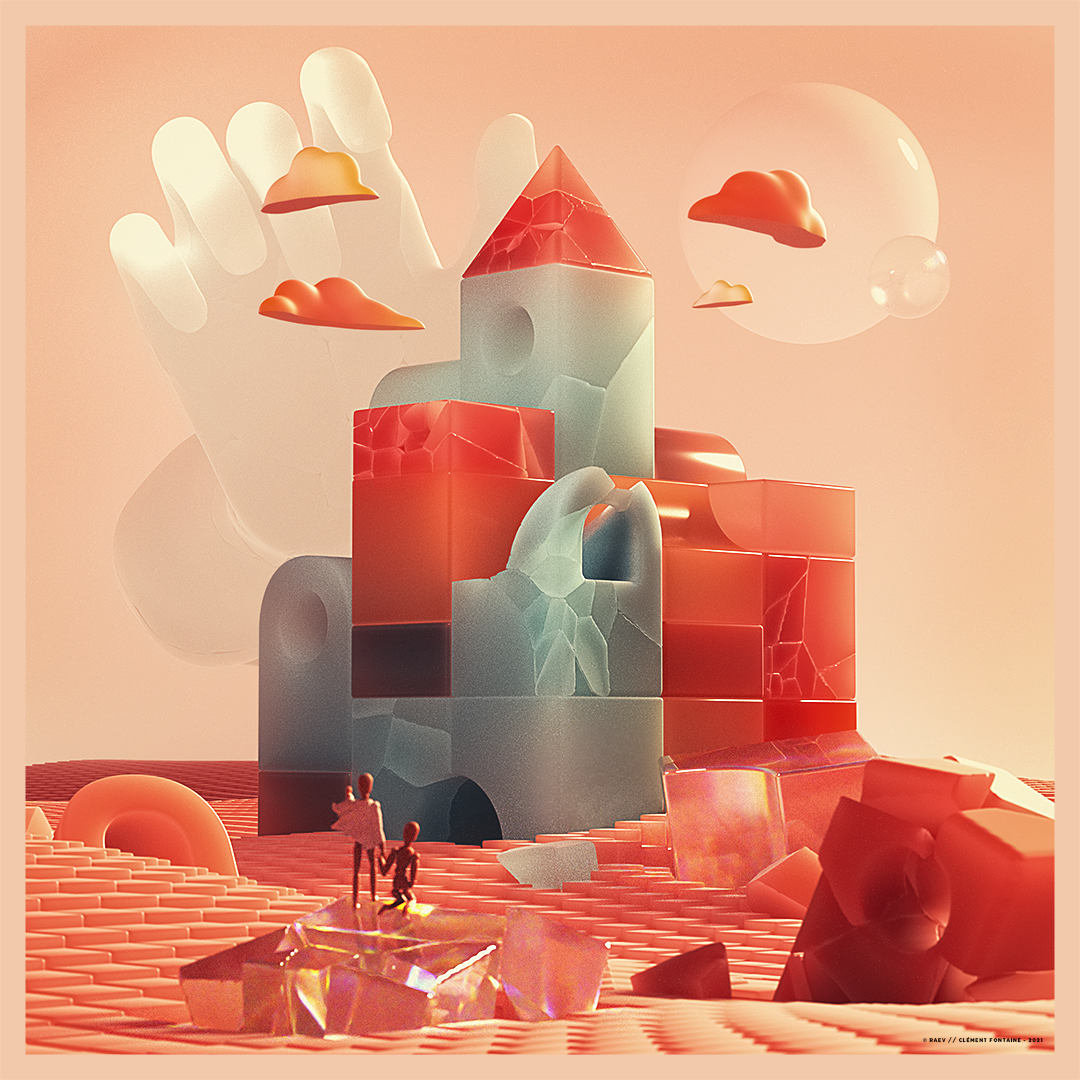
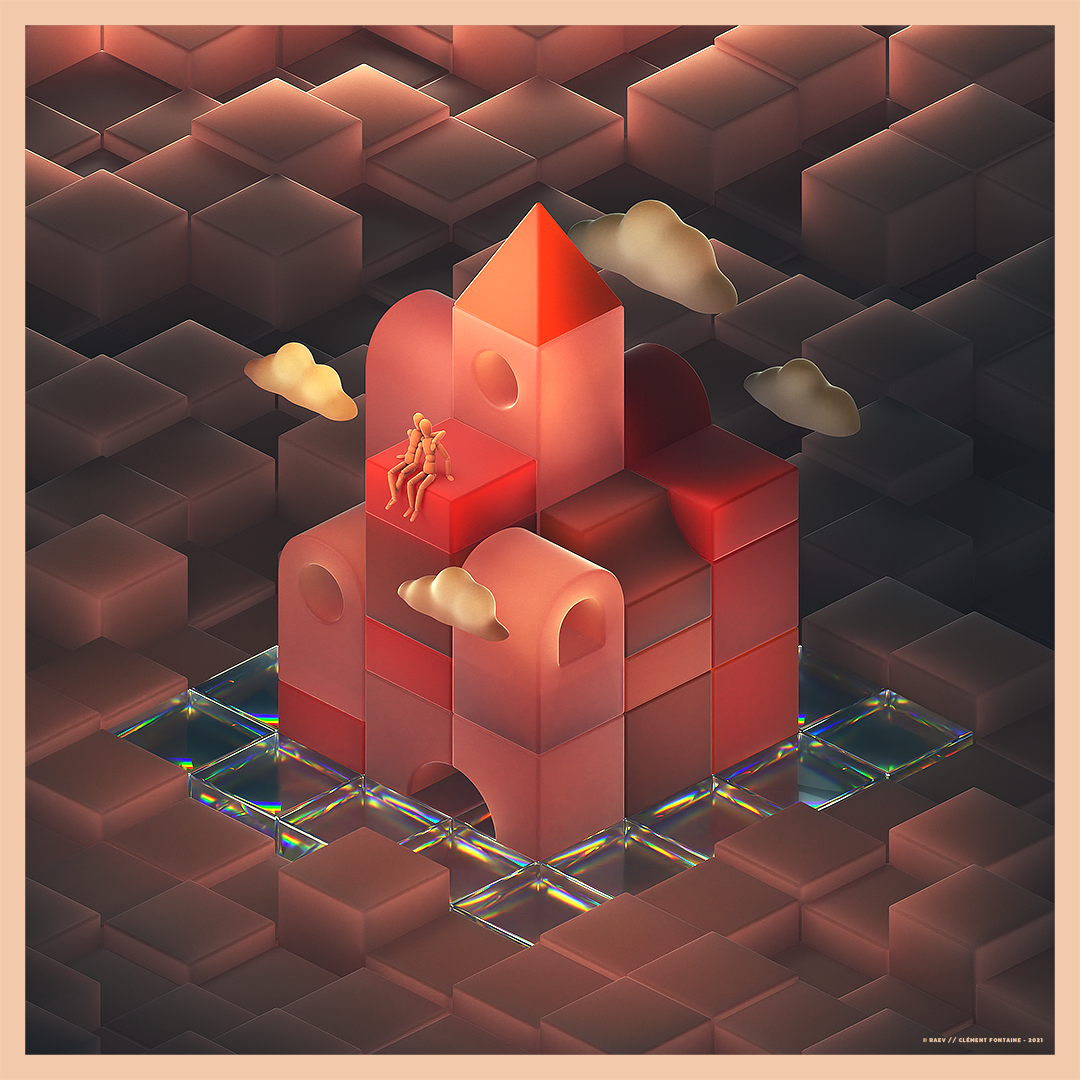
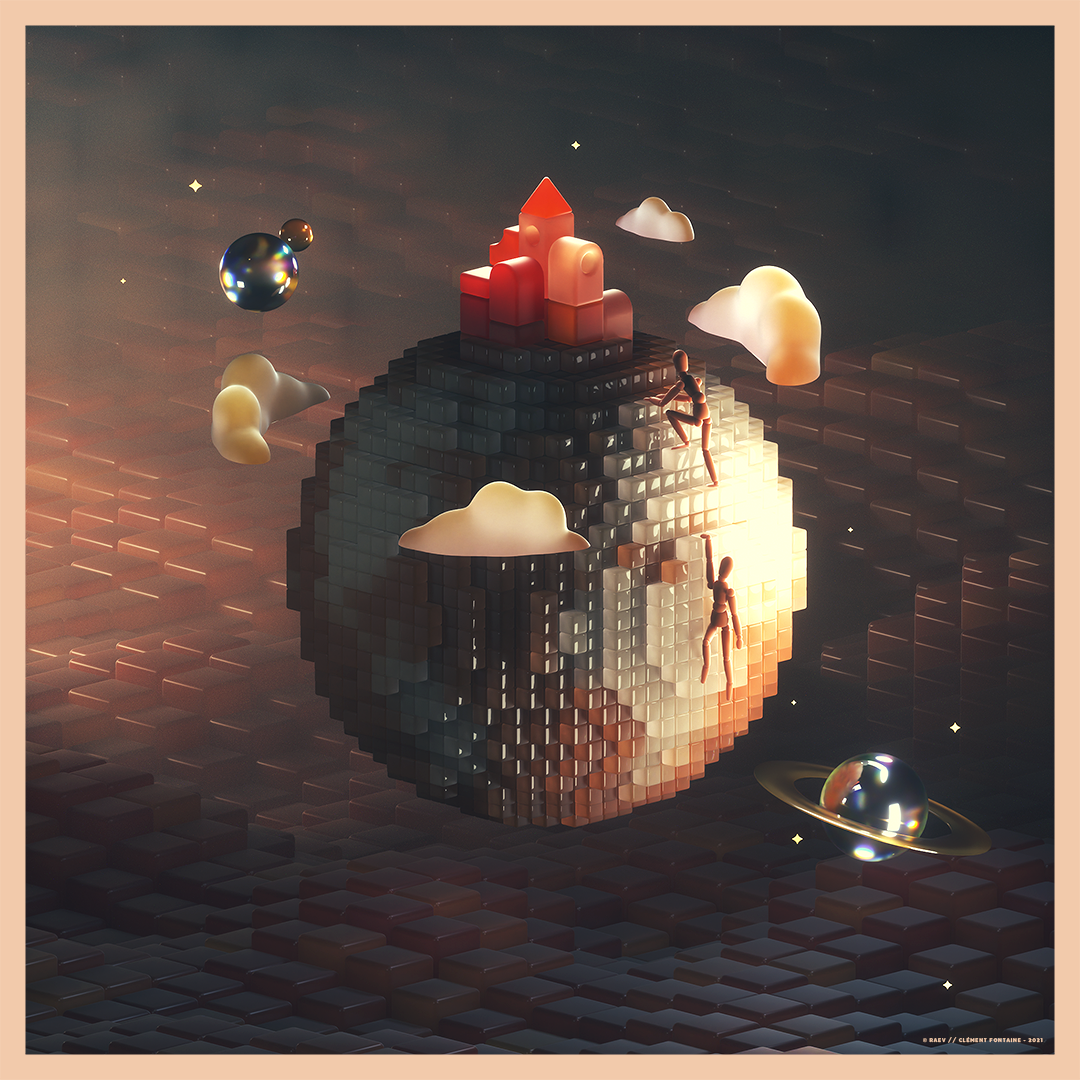
The universal language of children's play serves here to question the fragility of our ambitions. By repurposing building blocks and articulated mannequins, these images document a builder's cycle: from the initial assembly of a home to the exhaustion of conquest, ending with the inevitable return to a state of scattered parts.
The aesthetic draws from the work of Hieronymus Bosch, notably through a bird's-eye perspective and a sulfurous light. This technical choice transforms the 3D rendering into a miniature theater where, with a distance that is both tender and cruel, we observe the obstinacy of building. Here, the toy becomes the witness of an inevitable fall: under the gaze of a giant hand, perfect architecture always ends up becoming a simple pile of wood.

AND OTHERS...